For more information,
contact Ken
Wolf, LAMS Coordinator
LAMS as a Field of
Study
LAMS as a scholarly field is
dedicated to a deeper understanding of the greater
Mediterranean worlds of Late
Antiquity, the Middle Ages, and the Early Modern
period. Modeled on Classics, LAMS is
multi-disciplinary, focused on the Mediterranean and Near East, and
grounded in the original languages. Picking up
where Classics traditionally leaves off, LAMS
examines the history and culture of the Greek,
Latin, and Arabic heirs to the Roman and Persian
empires up into the seventeenth century. As a
result, LAMS provides the "big picture" for 1) the
rise of Christianity, Rabbinic Judaism, and Islam;
2) their interactions with one another; and 3)
their processing of the Hellenistic, Roman,
Persian, and "Germanic" cultural legacies. This approach to
the medieval studies in consistent with some of
the most recent trends in the field, as
illustrated by a recent Roundtable sponsored by
the American Historical Association (March 23,
2021): "Teaching the Medieval as Mediterranean:
Reorienting the Metanarrative"
LAMS as a major at the Claremont
Colleges
LAMS as a major is administered by the Classics department at Pomona
College, but students from any of the Claremont
Colleges may major in LAMS. Harvey Mudd students
who want to pursue a LAMS major would normally do
so as part of a double major.
To complete the LAMS major, a student is required to complete
- the LAMS Senior Seminar (CLAS/LAMS 190 PO) and the
LAMS Senior Thesis (CLAS/LAMS 191 PO)
- at least
ten additional courses that include:
- three full-credit language courses all of
which must be in either ancient Greek, Latin, or
Arabic. CLAS 103 PO and CLAS 104 PO are
half-courses; they may be repeated for course
credit. No more than one full credit in either
of these courses may be counted towards the language requirement for the LAMS
minor.
- one ancient history survey course, such as
- HIST 8 PO:Heroes and Heroines in the Ancient Mediterranean
- HIST 103A CM: Roman Republic
- HIST 103B CM: Roman Empire
- one ancient culture survey course, such as
- CLAS 1 PO:
Greek and Roman Classics
- CLAS 121 PZ: Myth
- RLST 20 PO: Introduction to the Hebrew Bible:
Text and Interpretation
- one LAMS survey course such as
- HIST
11 PO: Medieval Mediterraean
- HIST 104 CM: Late
Antiquity and the Middle Ages
- one LAMS
Research Seminar such as
- HIST 101W PO: Heresy and Church
- CLAS
150BE PZ: The Roman Empire in the East
- CLAS
164 PZ: Pompeii and the Cities of Vesuvius
- HIST 183 CM: The Fall of Rome and the End of
Empire
- three additional LAMS courses
Nota bene:
- student may petition to have other appropriate languages count toward the major (for instance, Hebrew, Syriac, Old English)
- No single course may be used to
fulfill more than one of the above required
categories.
The LAMS thesis is a year-long project. A thesis proposal
(which also identifies the primary and secondary readers) is due on April 15 of
the junior year and the thesis itself is due on
April 15 of the senior year. The LAMS
thesis should be modeled on the scholarly articles
that appear in the principal medieval studies
journal in the United States, Speculum: it
should, in the end, be about the same length and
"density" as a Speculum article and it
should be formatted according to the Speculum style sheet. LAMS
students are especially encouraged to use their theses to showcase their
linguistic skills (particularly in Greek, Latin,
or Arabic) to their theses.
Nota bene:
- Students may not count
toward the LAMS Major any course used to satisfy
the requirements for another major or minor.
- Each prospective major's program should be designed as early as
possible in consultation with one or more LAMS
faculty members with an eye to coherence and
depth. Students are encouraged to take related
courses in other departments.
- LAMS students are strongly encouraged to study
abroad in one of the many LAMS-friendly programs,
where they can take courses that can be counted
toward the major.
- LAMS Students who intend to pursue a graduate
degree in a LAMS-related field are advised to
begin acquiring the modern language(s) appropriate
for their specific regional interests.
LAMS as a minor at the Claremont
Colleges
To complete the LAMS minor, a student is required
to complete
- three full-credit language courses all of
which must be in either ancient Greek, Latin, or
Arabic. CLAS 103 PO and CLAS 104 PO are
half-courses; they may be repeated for course
credit. No more than one full credit in either
of these courses may be counted towards the language requirement for the LAMS
minor.
- three additional LAMS courses.
Nota bene: Students may not count toward
the LAMS Minor any course used to satisfy the
requirements for their major.
LAMS faculty at the Claremont
Colleges
History
Shane Bjornlie
(History, Claremont McKenna College): Late antique
and early medieval history
Heather Ferguson (History,
Claremont McKenna College): Early Islam, Ottoman
Empire
Carina Johnson (History, Pitzer
College): Habsburg Empire
Corey Tazzara
(History, Scripps College): Early Modern
Italy
Ken Wolf (History & Classics,
Pomona College): Medieval Mediterranean history,
medieval Christianity
Literature
Marino Forlino
(Italian, Scripps College): Italian, Renaissance
literature
Jordan Kirk (English, Pomona
College): Medieval English literature
Tessie Prakas
(English, Scripps College): Early Modern English
literature
Ellen Ketels (Literature,
Claremont McKenna College): Medieval English
literature
Colleen Rosenfeld
(English, Pomona College): Early Modern English
literature
Religious Studies
Ahmed Alwishah (Philosophy, Pitzer
College): Medieval Islamic Philosophy
Esther Chung-Kim
(Religious Studies, Claremont McKenna
College): Reformation
Gary Gilbert
(Religious Studies, Claremont McKenna
College): Judaism and Early Christianity
Luis Sales
(Religious Studies, Scripps College): Non-Western
early Christianities
Jamel Velji (Religious Studies,
Claremont McKenna College): Medieval Islam, apocalypticism
Dan Watling (Religious Studies,
Pomona College): Medieval Islam
Archaeology, Art, and Music
Michelle Berenfeld (Classics,
Pitzer College): Late Antique art and
archaeology
Donna Di Grazia (Music, Pomona
College): Renaissance music history
George Gorse (Art
History, Pomona College): Renaissance art and
architecture
Affiliated Faculty
Chris Chinn (Classics,
Pomona College): Latin literature
Chanchal Dadlani (Art
History, Pomona College): Islamic and South Asian
Art
Nicola Denzey Lewis (Religion,
Claremont Graduate School): Late Antiquity
Bassam Frangieh
(Arabic, Claremont McKenna College): Arabic and
Arabic literature
Benjamin Keim (Classics, Pomona
College): ancient Greek history
Ryan Milov-Cordoba (Classics, Scripps
College): Arabo-Greek philosophy
Richard McKirahan
(Classics, Pomona College): ancient Greek
philosophy
Arash Khazeni (History, Pomona
College): Middle Eastern, South Asian
history
David Roselli
(Classics, Scripps College): Greek
literature
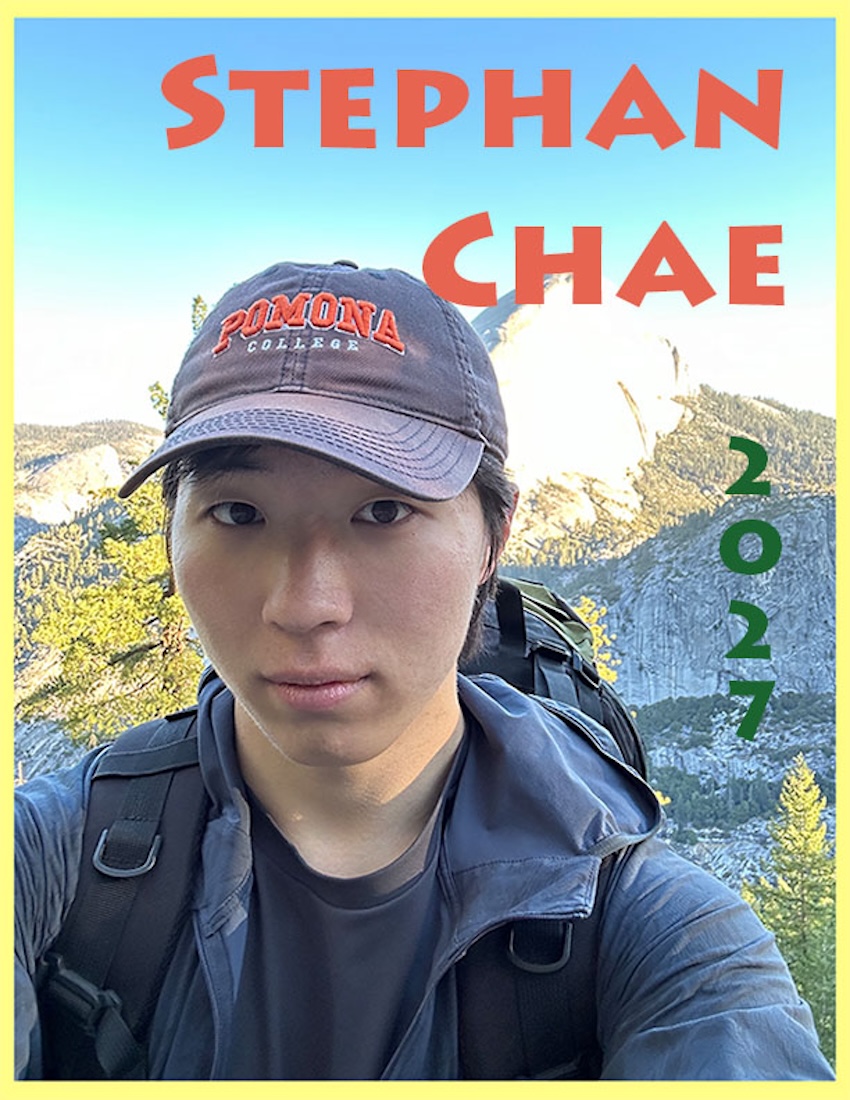
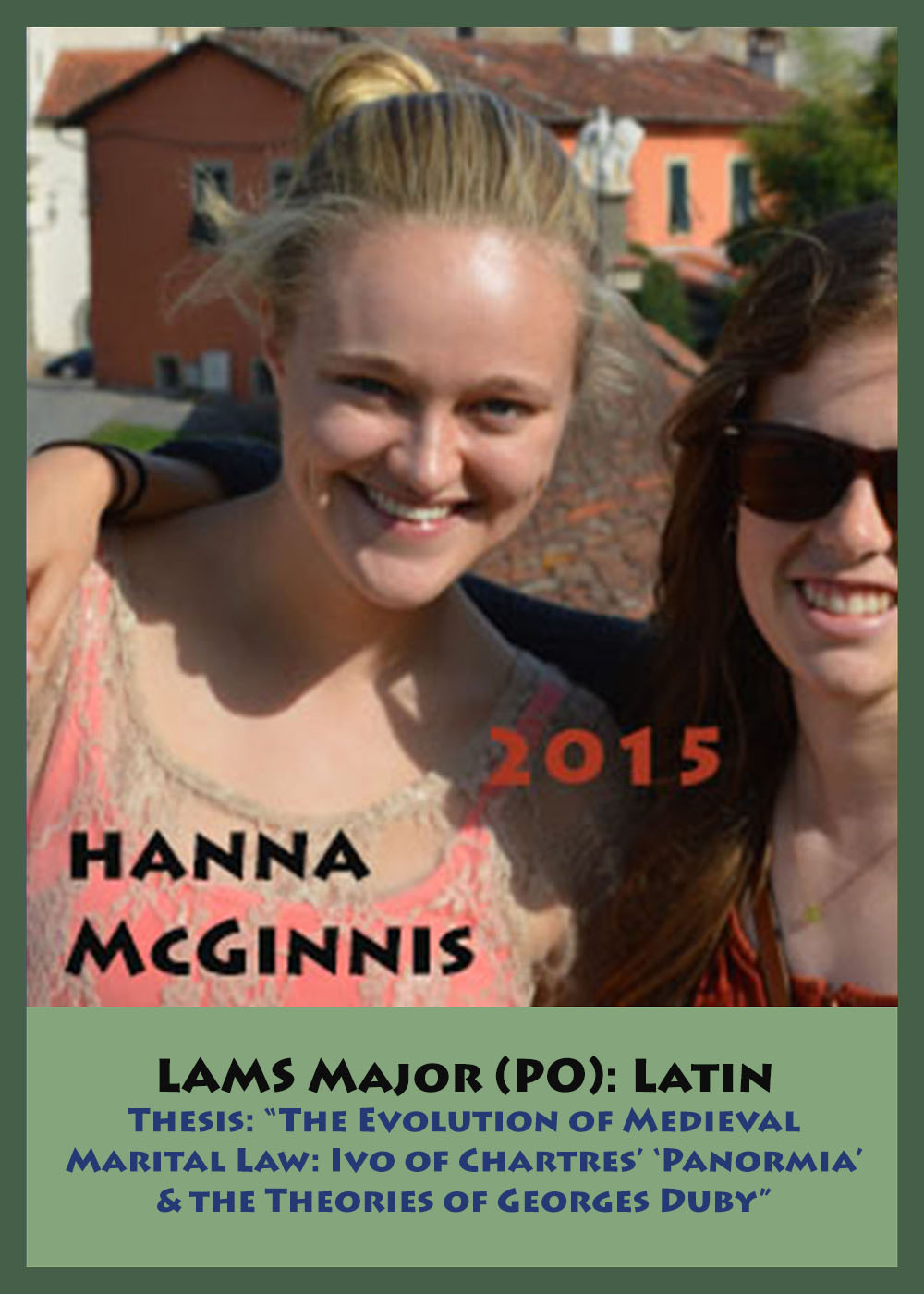
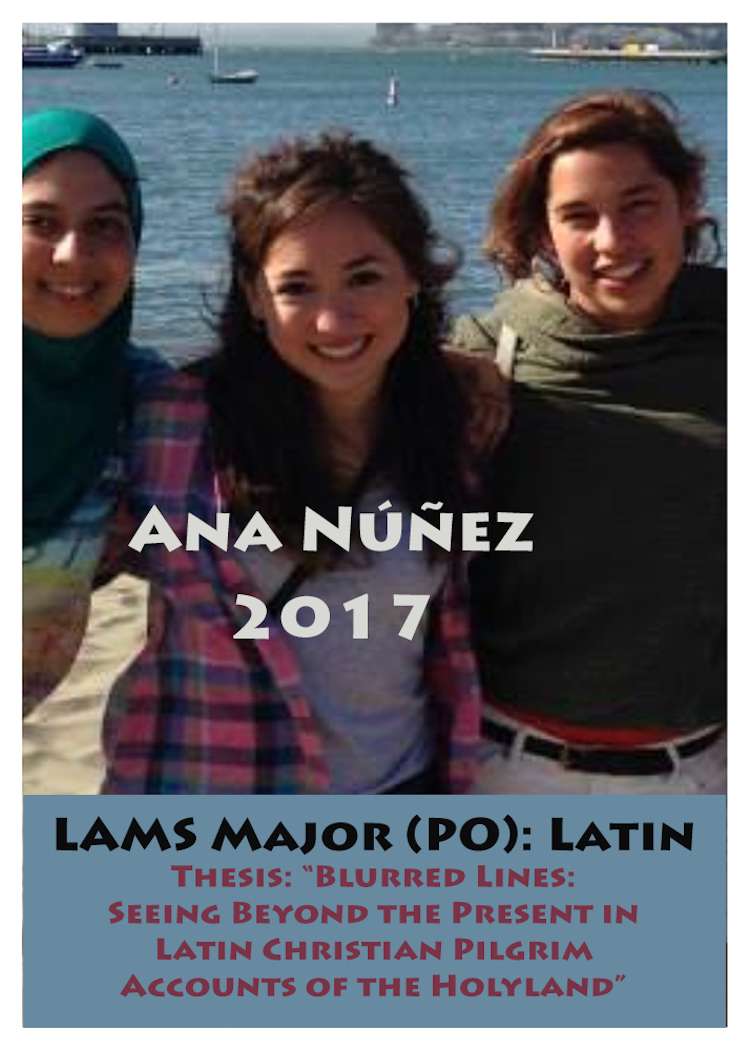
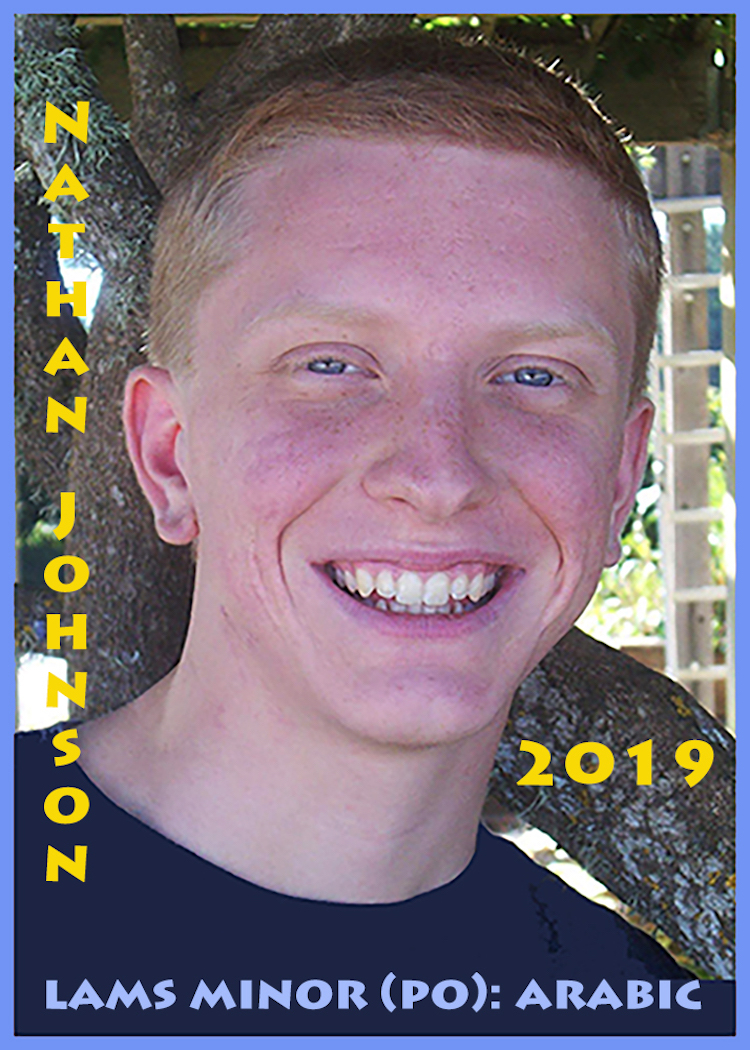
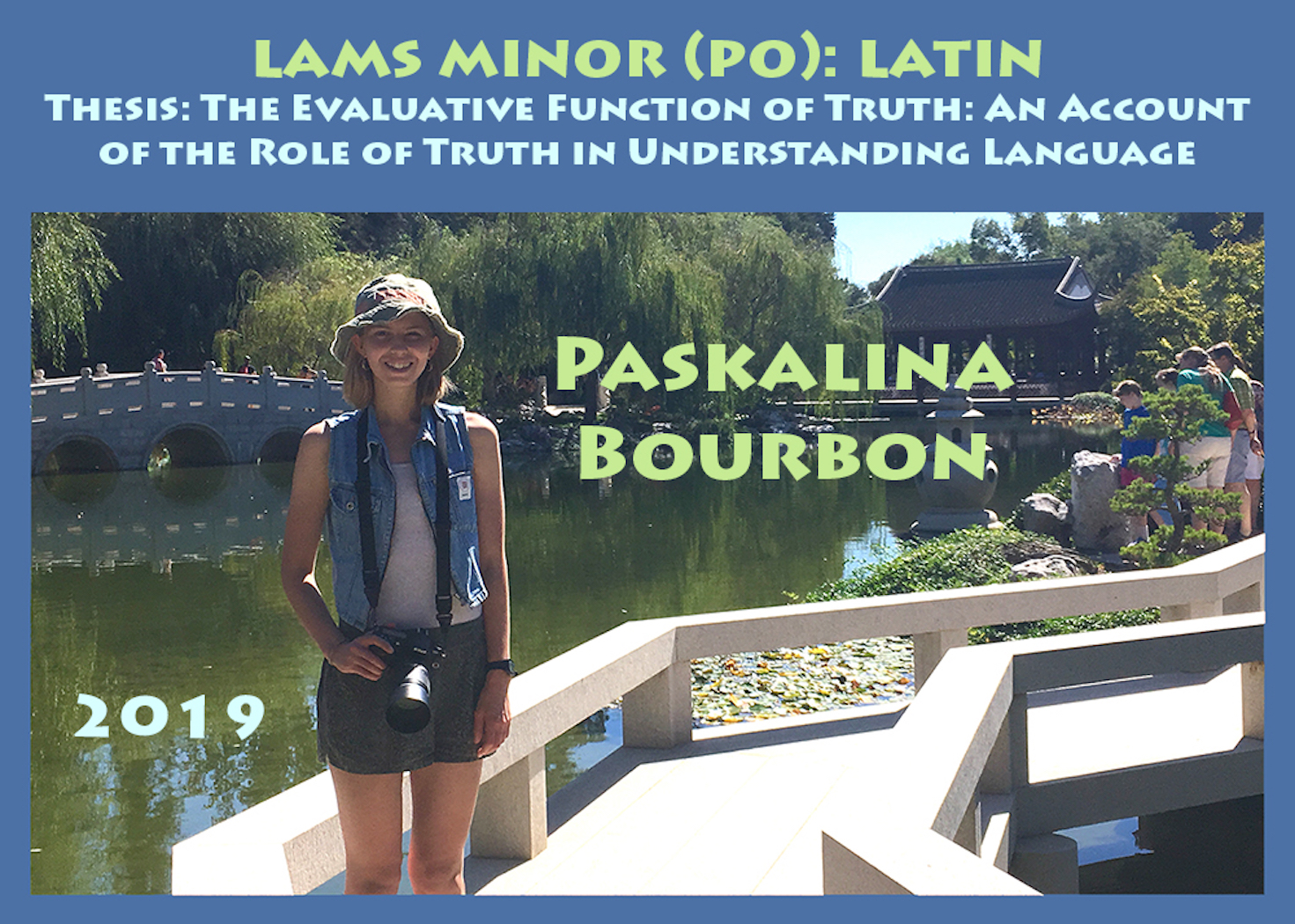
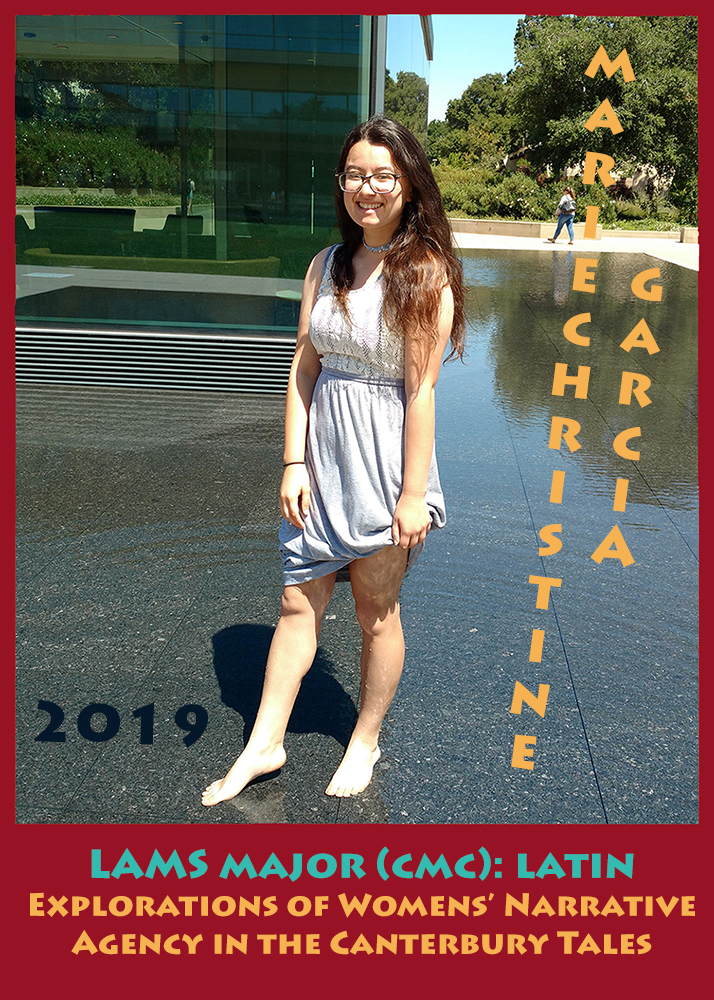
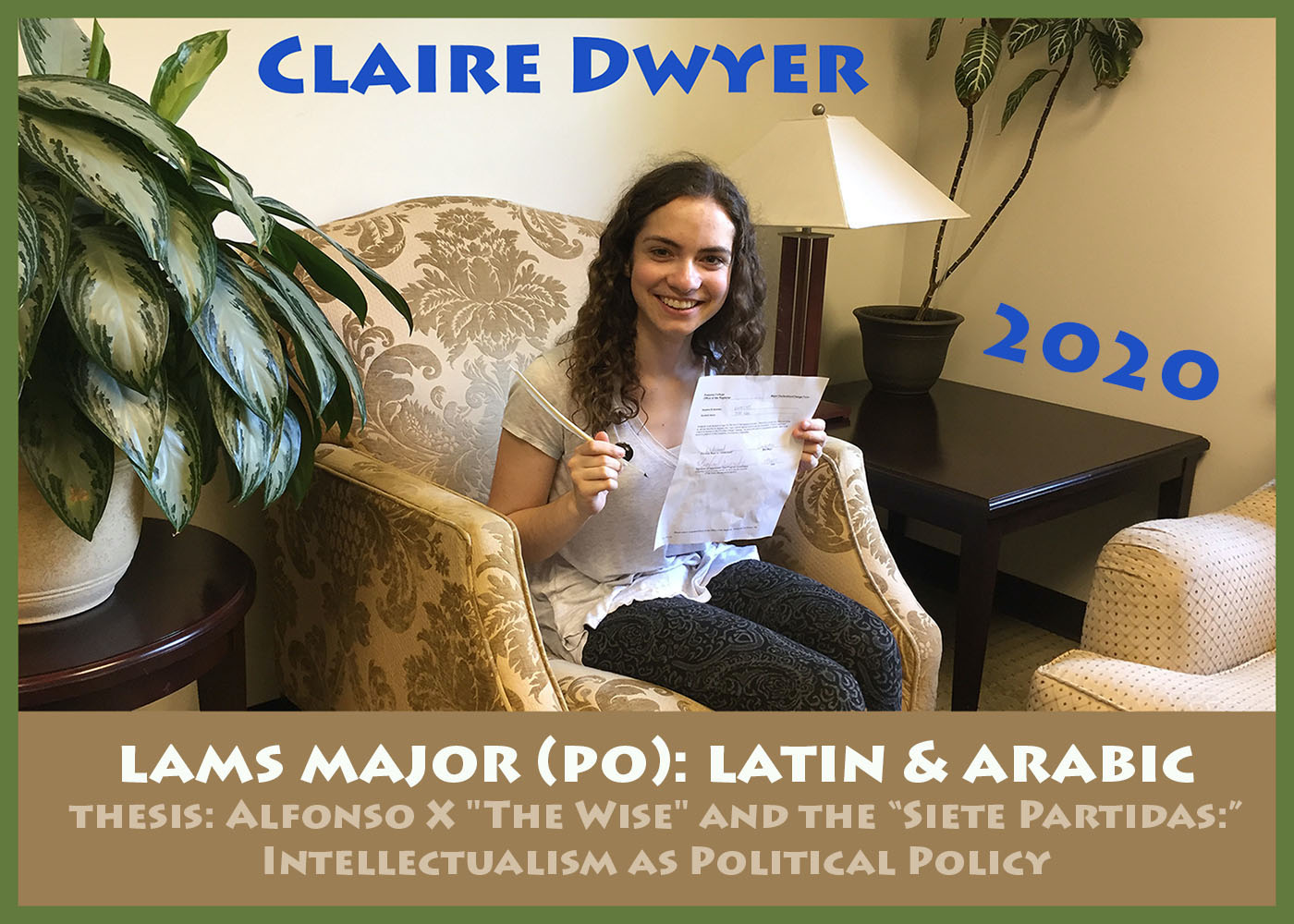
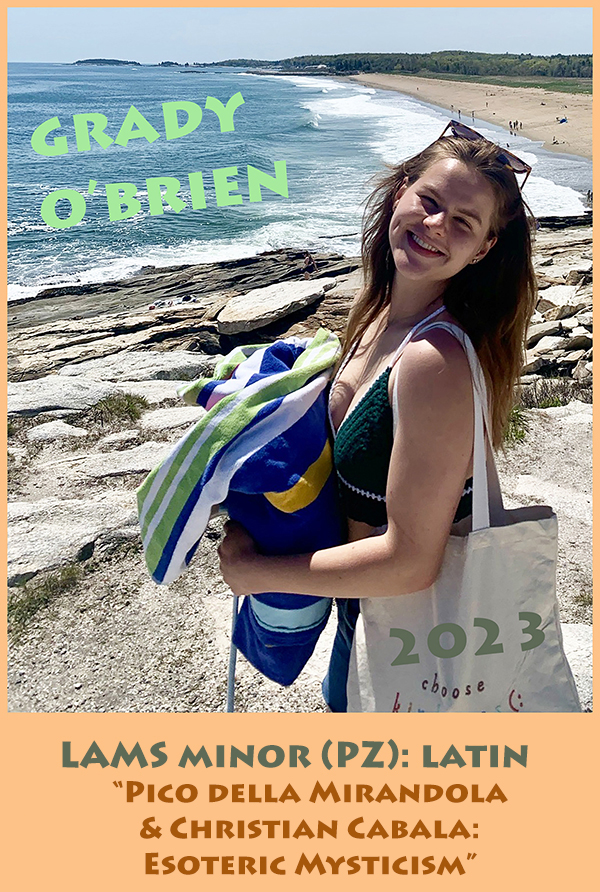
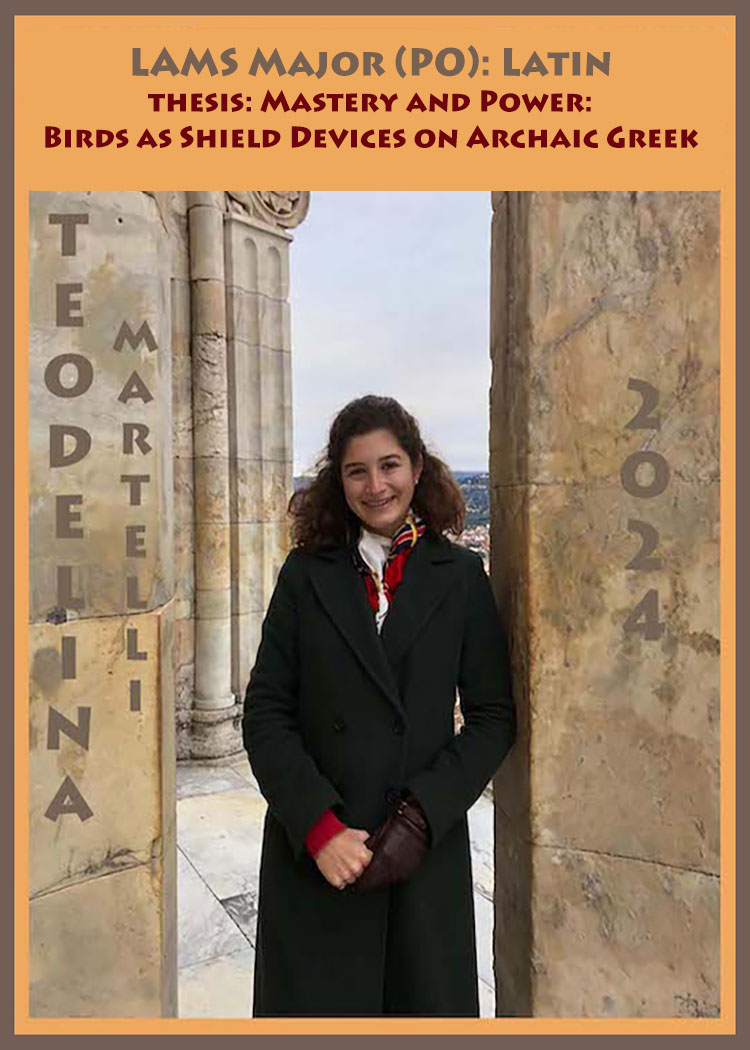
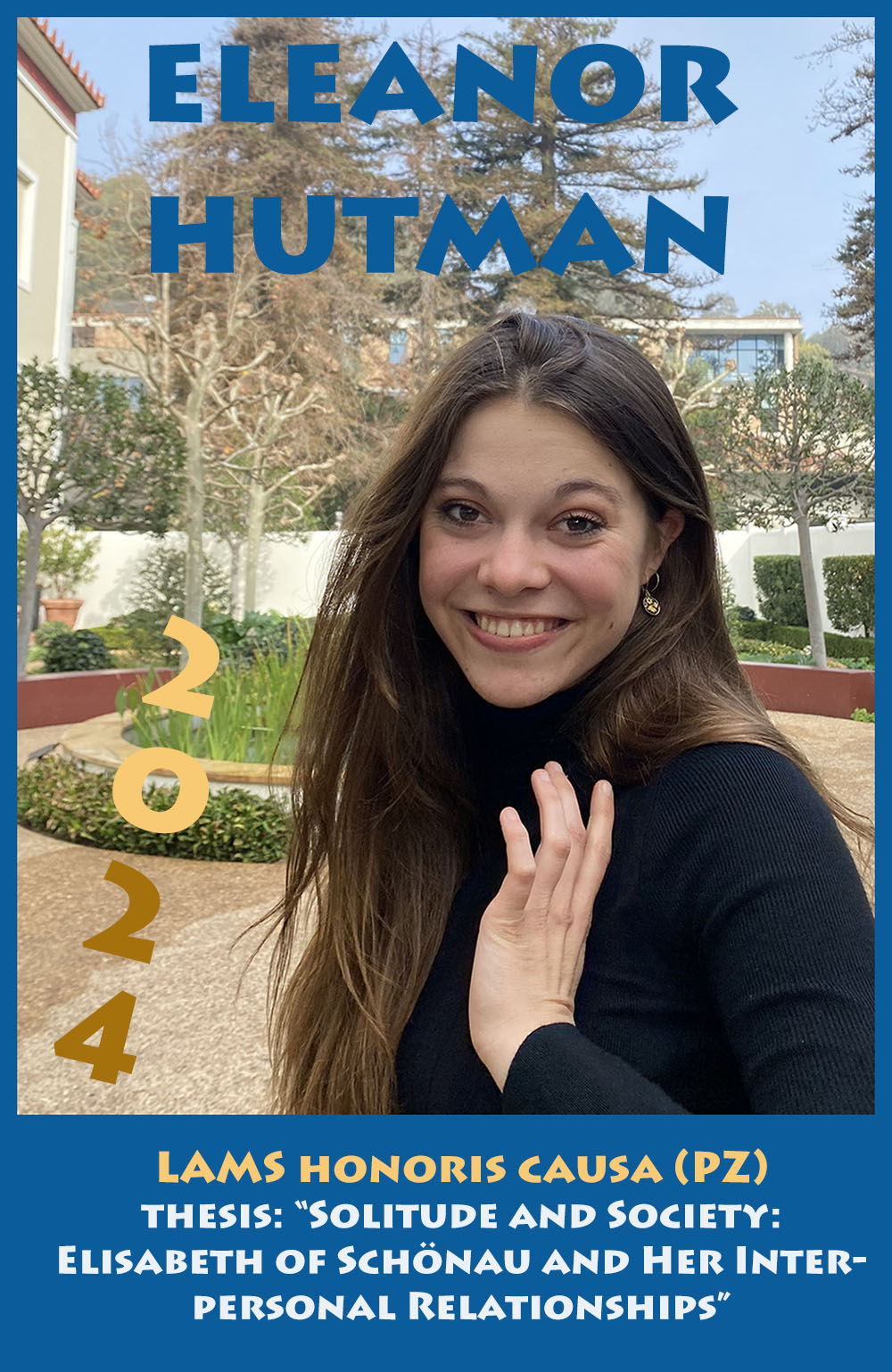
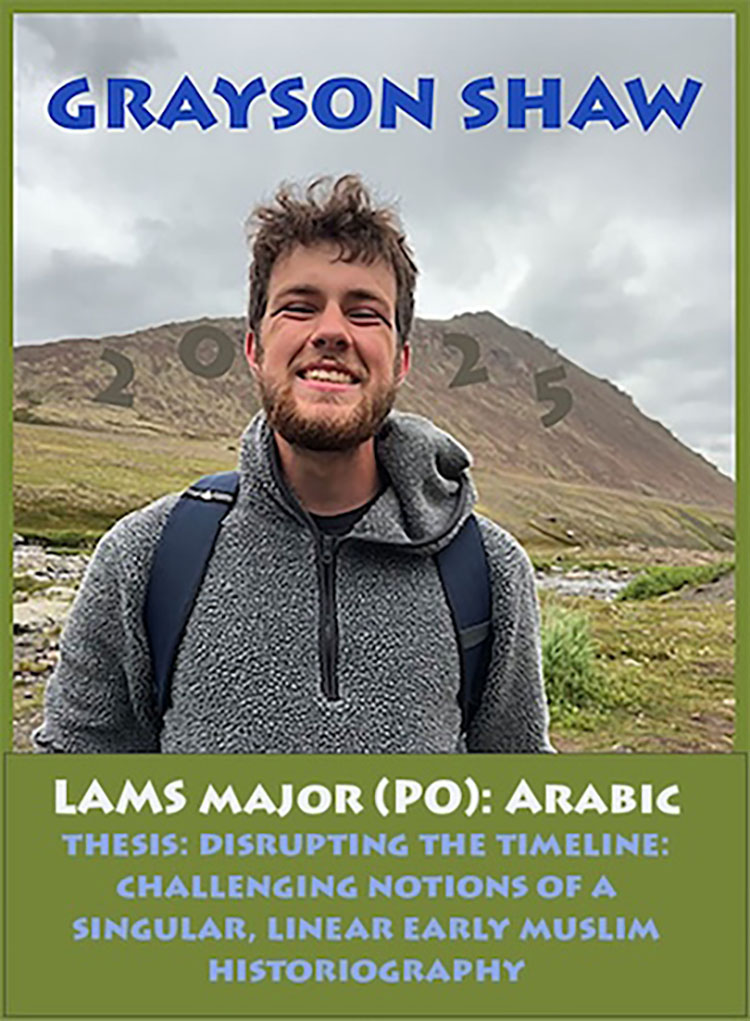
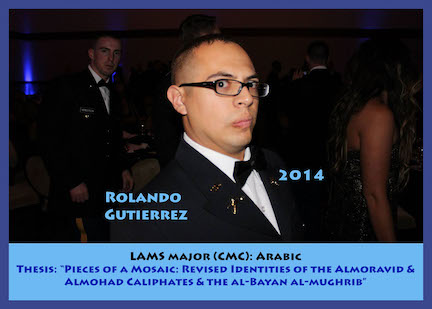
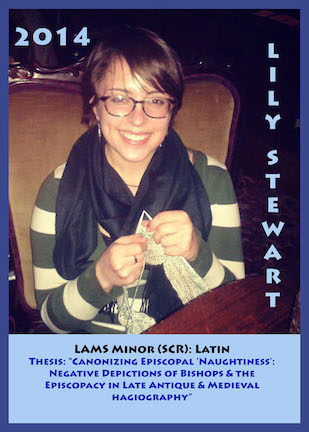
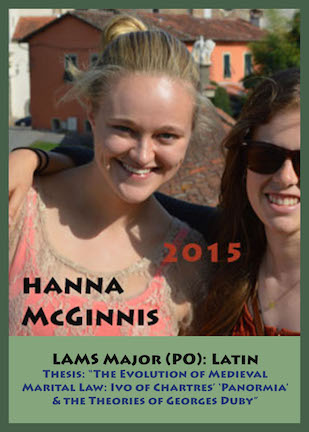
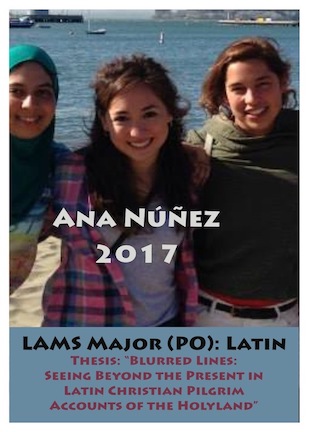
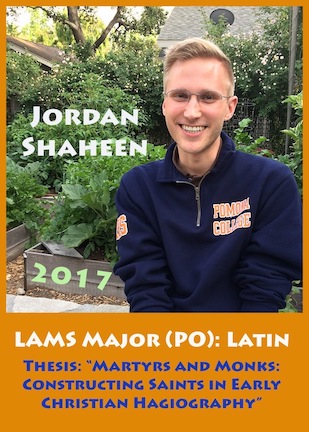
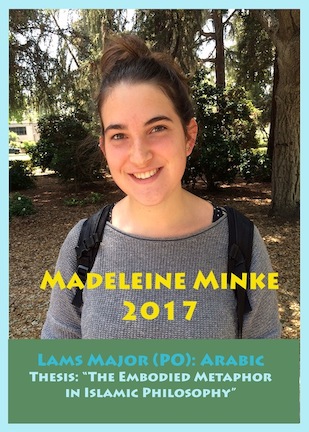
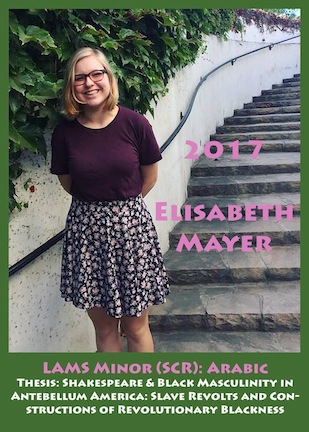
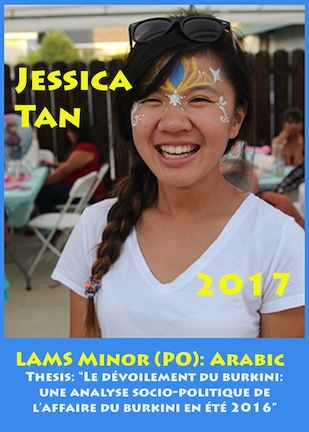
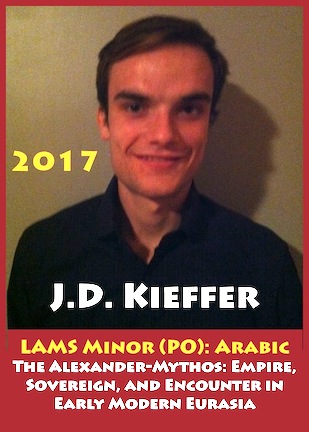
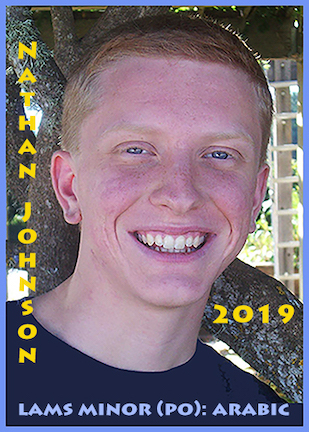
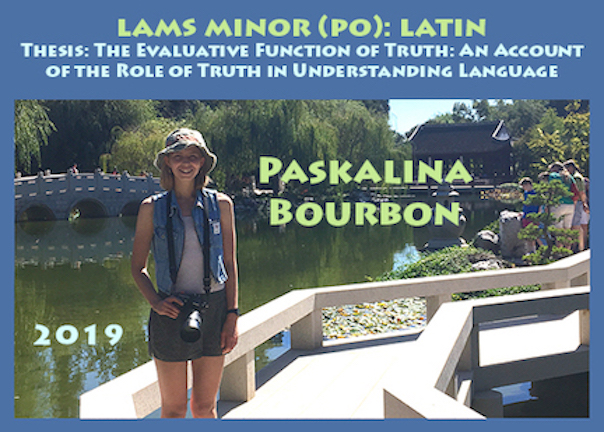
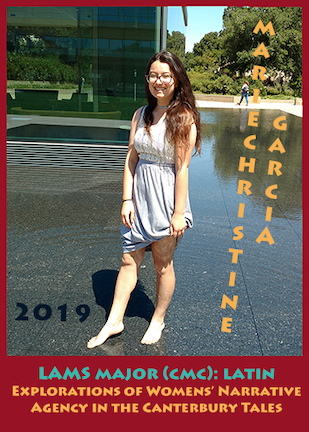
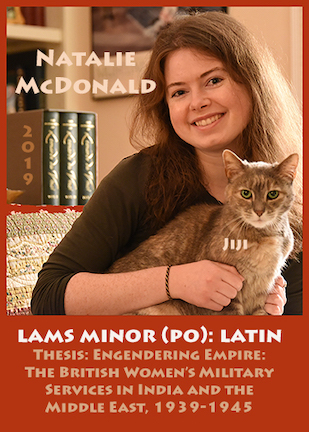
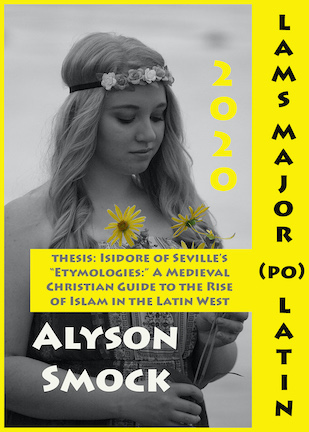
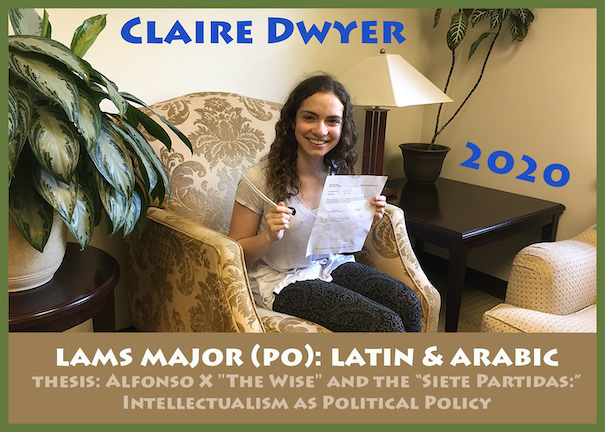
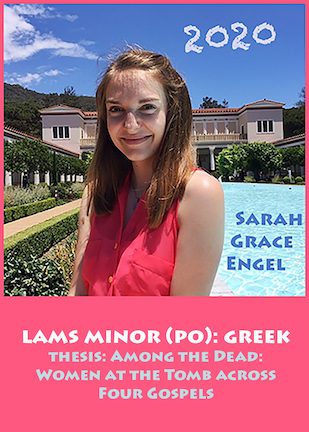
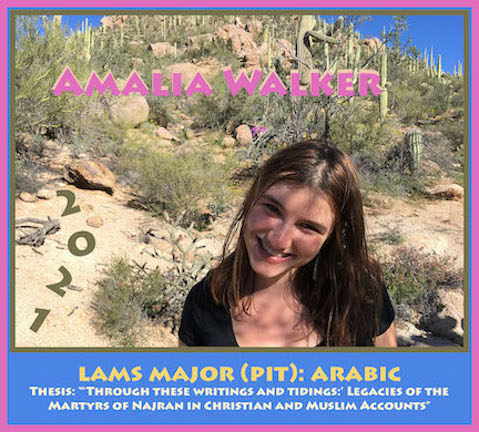
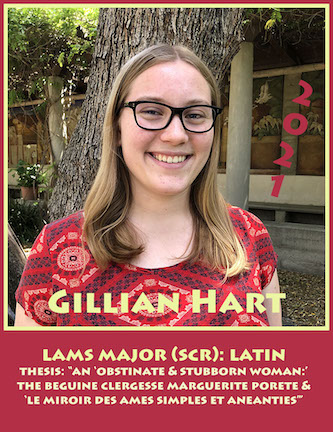
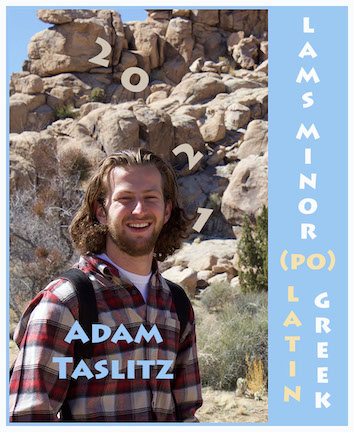
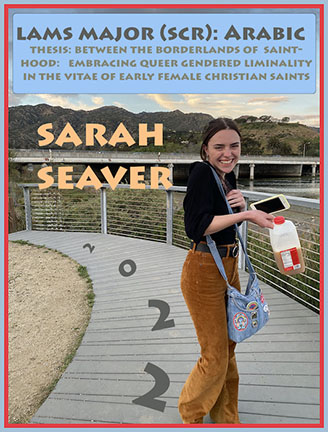
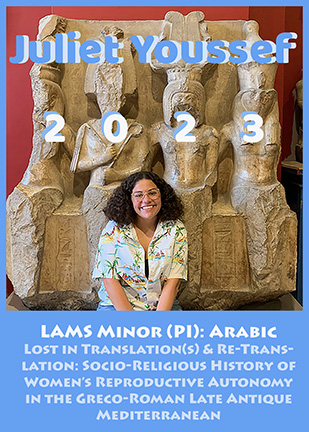
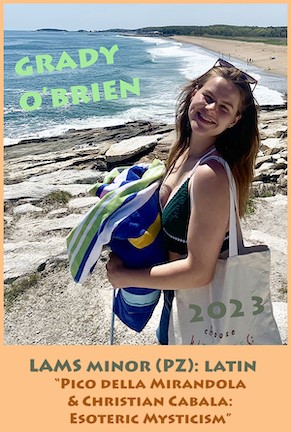
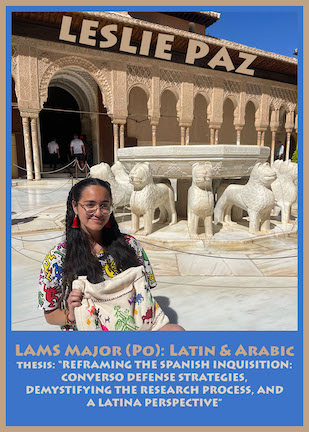
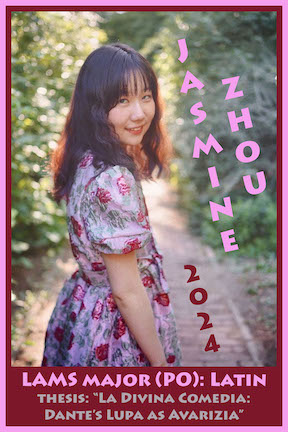
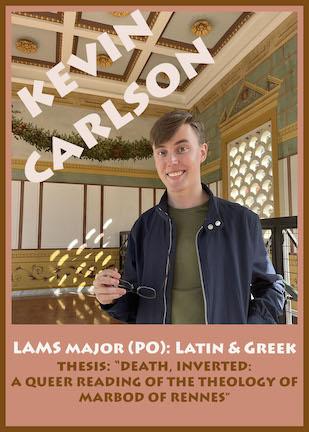
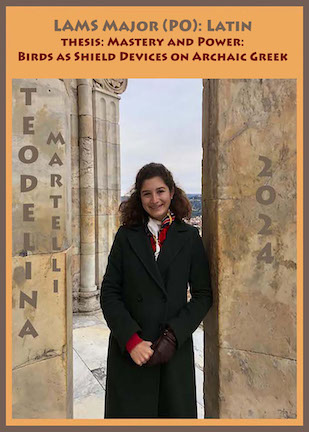
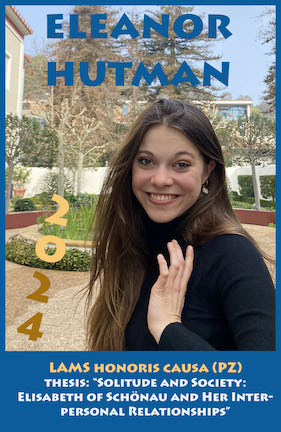
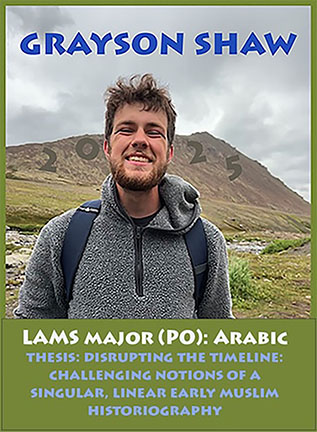
Current LAMS Students (majors and
minors) at the Claremont Colleges


LAMS
Emeriti



















LAMS as an Inter-Collegiate
Scholarly Community
The primary purpose of LAMS is to
provide a cohesive, inventive undergraduate
curriculum that embodies the goals of a liberal
arts education. But LAMS has also hosted symposia
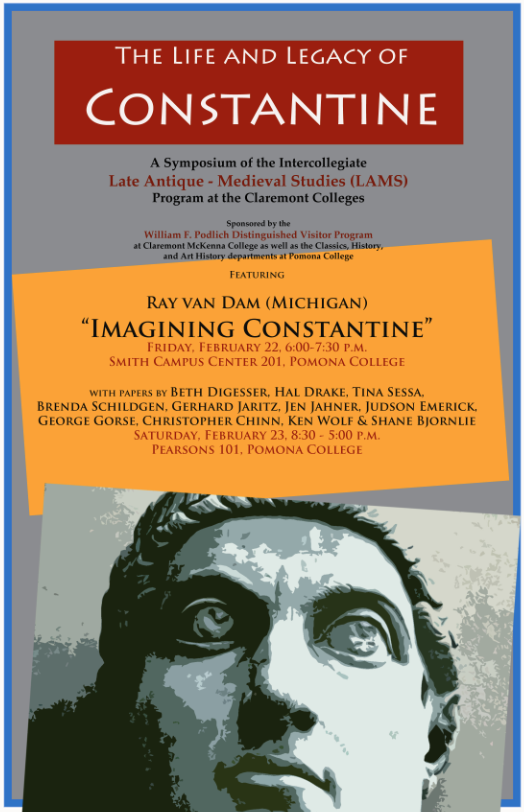
and workshops on specific topics. The first of
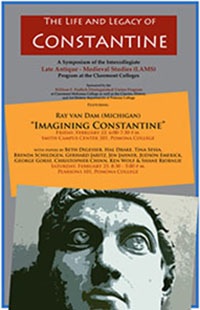
these (LAMS I, 2013) focused on the "Life and
Legacy of Constantine," in commemoration of the
1,700th anniversary of the Edict of Milan, and
featured a keynote address by Ray Van Dam. The
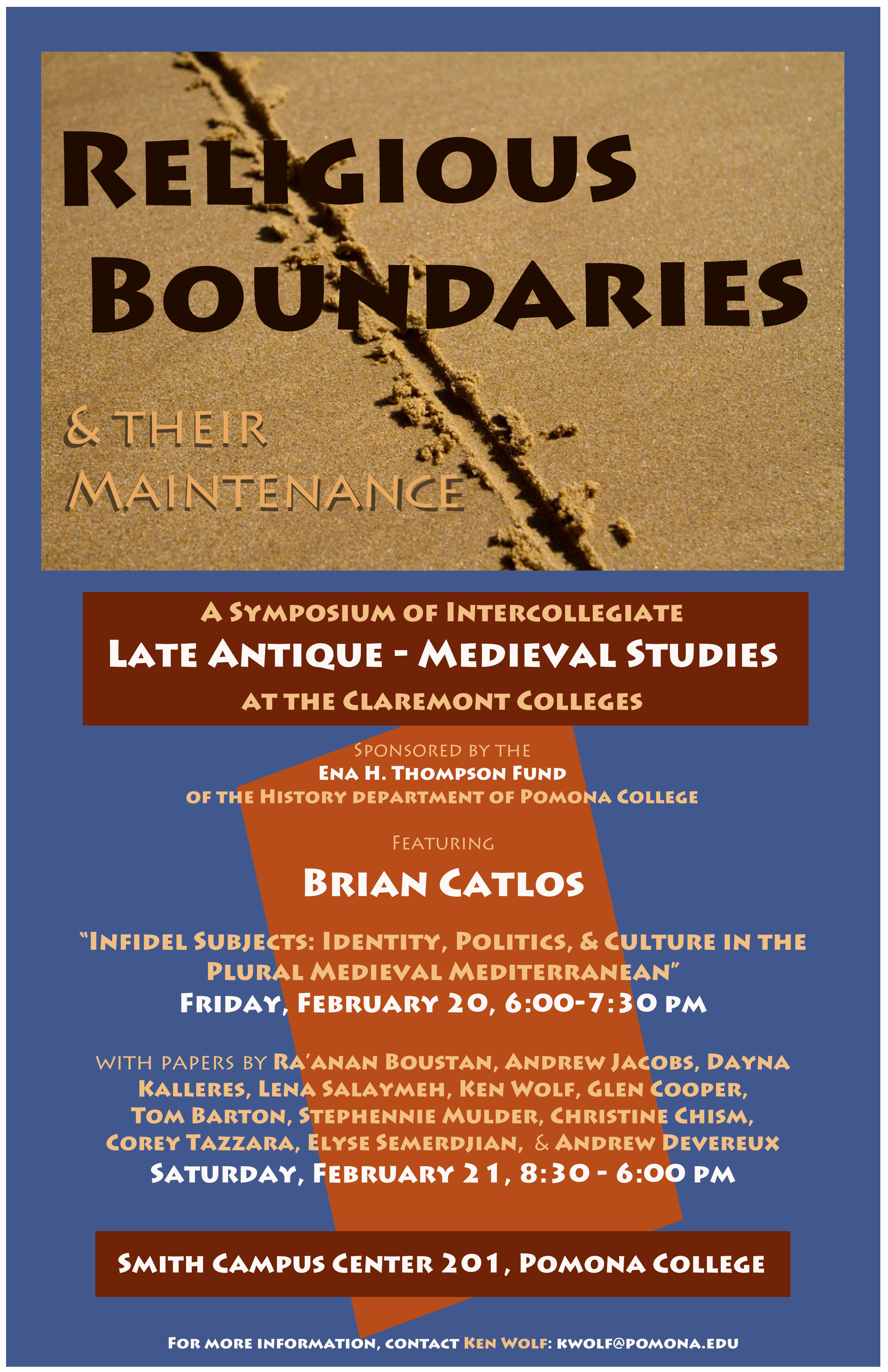
theme of the second (LAMS II, 2015) was "Religious
Boundary Maintenance" with Brian Catlos as the
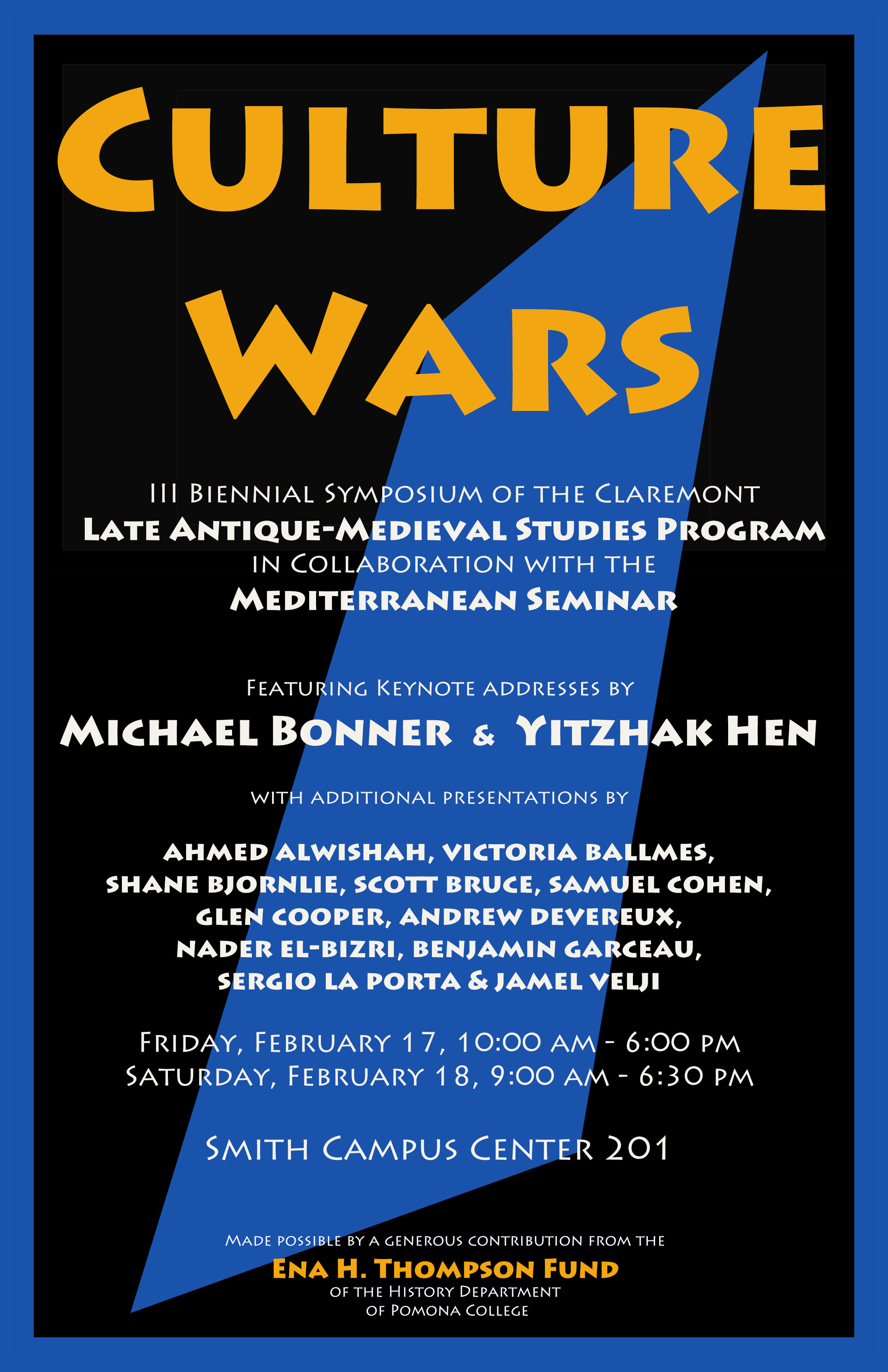
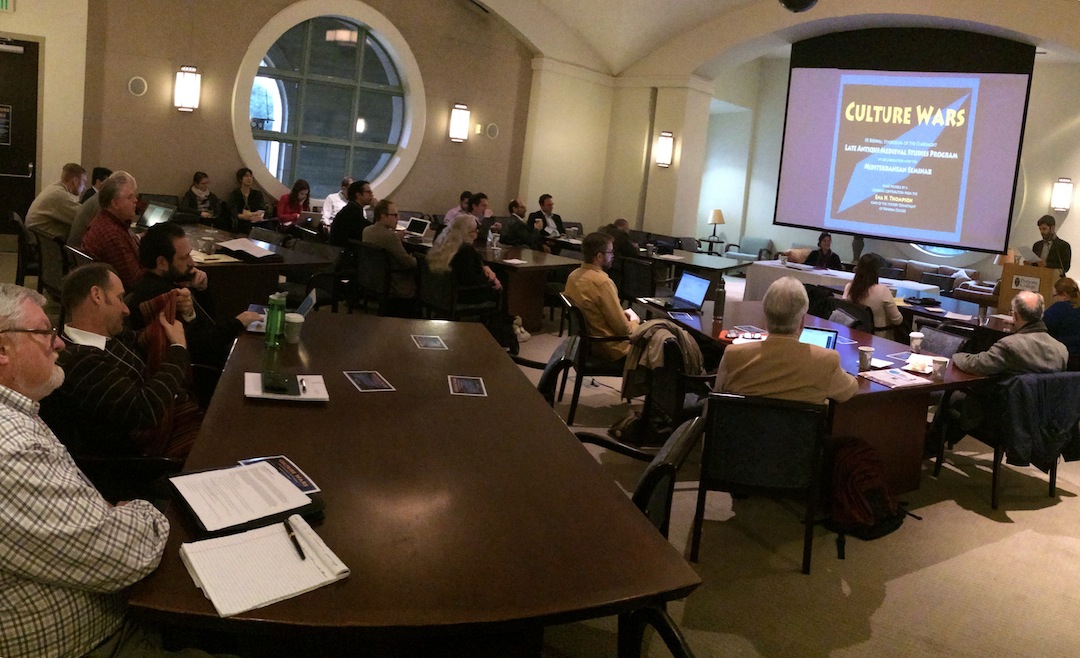
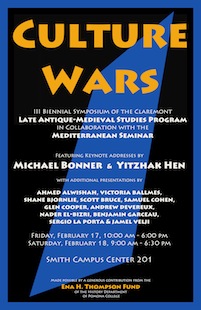
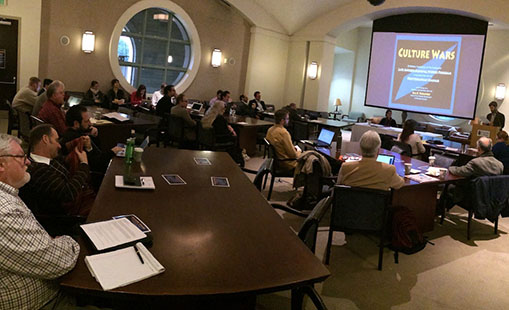
keynote speaker. The third such gathering (LAMS
III, 2017), co-hosted by the Mediterranean
Seminar, was titled "Culture Wars," with keynote
addresses by Michael Bonner and Yitzhak Hen. LAMS
IV (2019) featured a reunion of professors and
current graduate students each of whom was once an
undergraduate at one of the Claremont Colleges.
The theme was, appropriately enough, "Legacies,"
and the keynote speakers, all alumni of Pomona
College, were Robert E. Bjork (Arizona State),
John Eldevik (Hamilton College), Adam Schor
(University of South Carolina), and Adam Goldwyn
(North Dakota State). In September 2019, LAMS
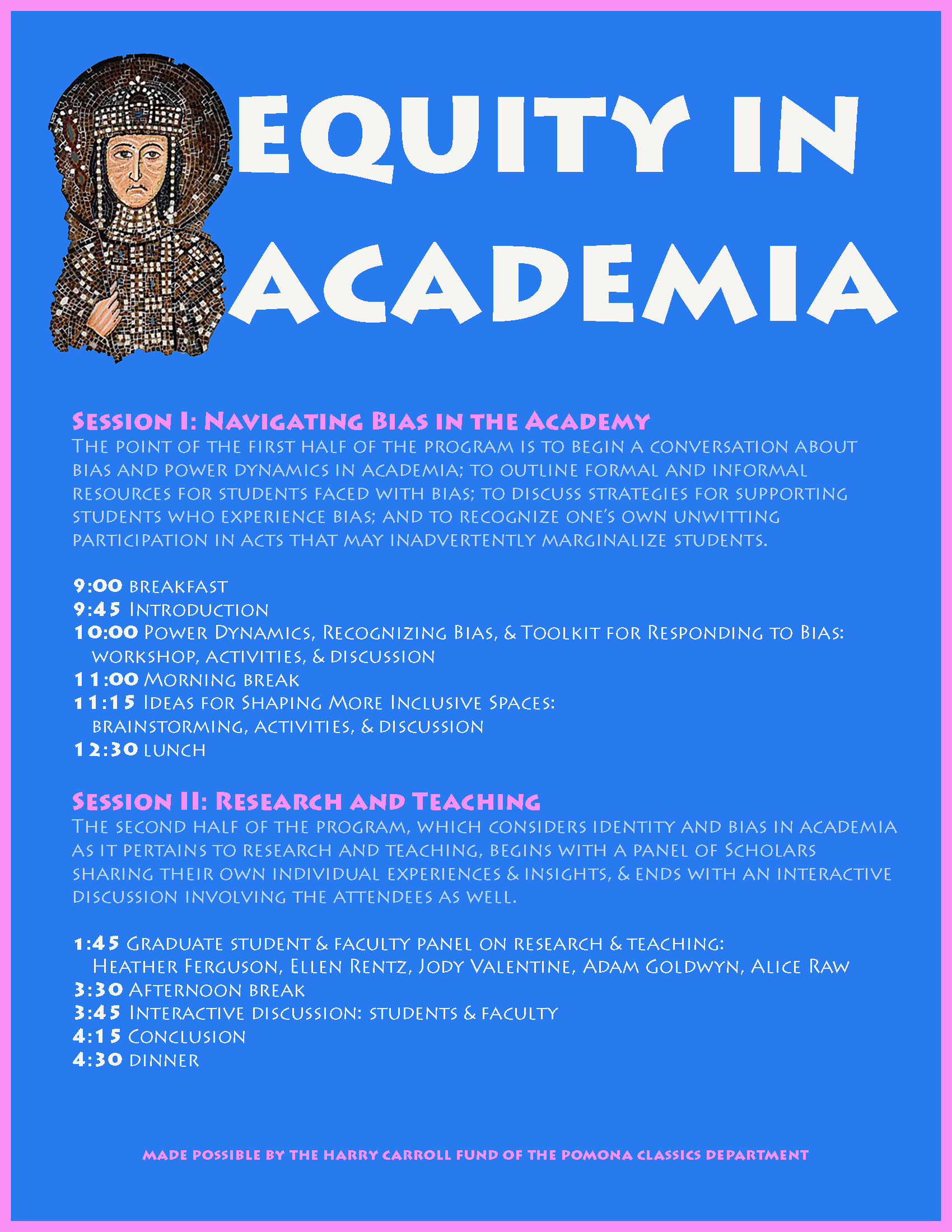
hosted a special "Equity in Academia" workshop,"
organized by three LAMS alumnae. It focused on the
specific challenges faced by women pursuing
academic careers.



LAMS also hosts occasional visits by scholars who
give public presentations and attend LAMS courses.
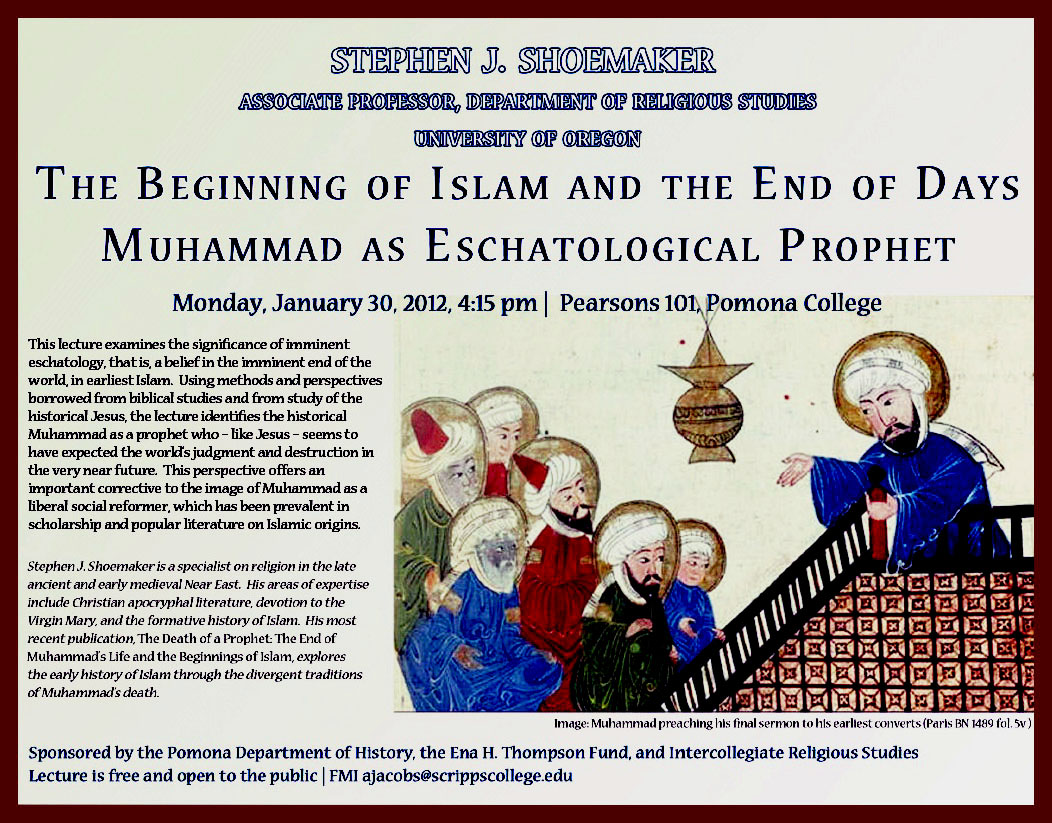
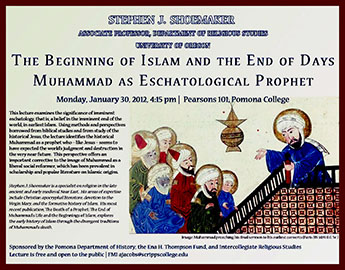
- Stephen Shoemaker (University of Oregon),
"The Beginnings of Islam and the End of Days:
Muhammad as Eschatological Prophet," January 30,
2012.
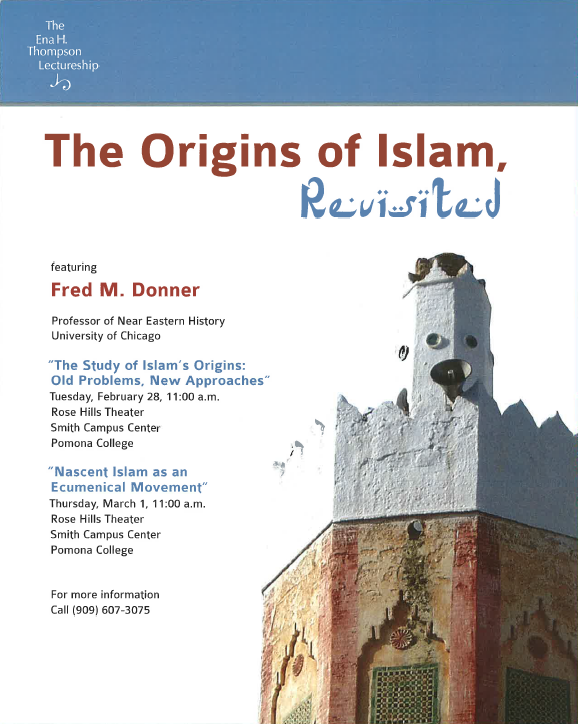
- Fred M. Donner (University of Chicago), "The
Origins of Islam, Revisited," Ena H. Thompson
Lectureship, February 27 - March 4, 2012.
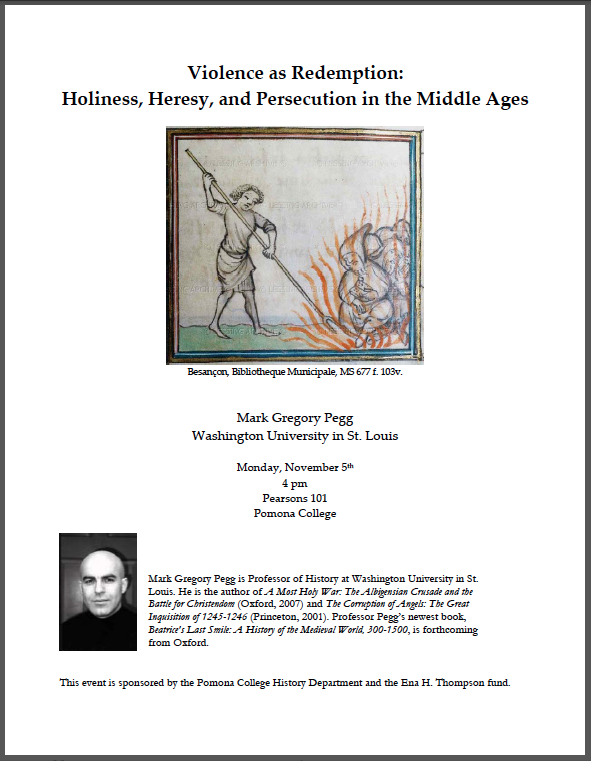
- Mark Pegg (Washington University, St. Louis),
"Violence as Redemption: Holiness, Heresy, and
Persecution in the Middle Ages," November 5, 2012.
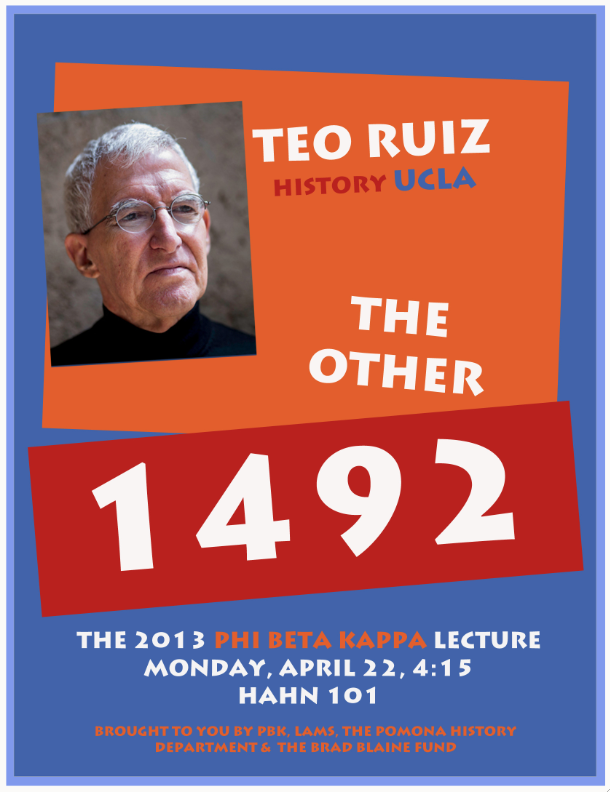
- Teofilo Ruiz (UCLA), "The Other Middle Ages,"
Phi Beta Kappa Lecture, April 22, 2013.
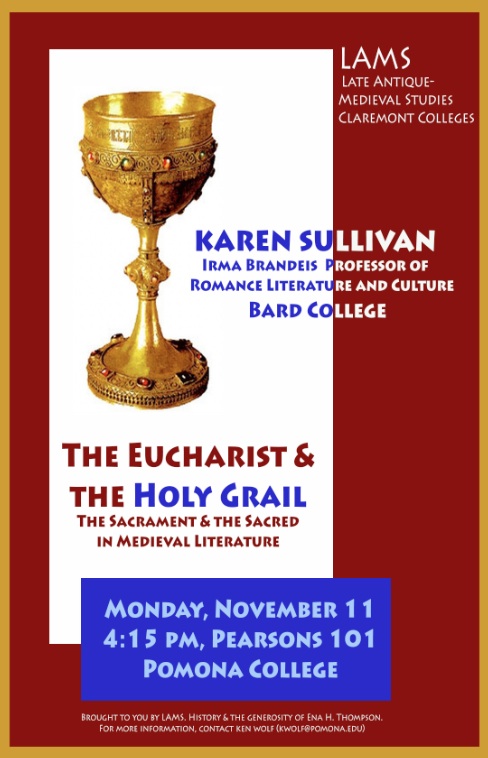
- Karen Sullivan (Bard College), "The Eucharist
and the Holy Grail: The Sacrament and the Sacred
in Medieval Literature," November 11, 2013.
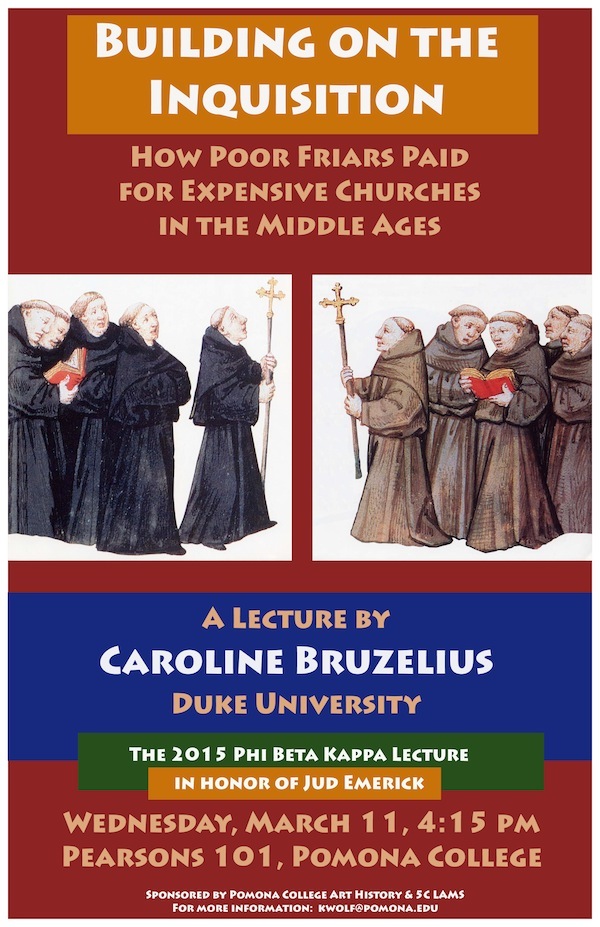
- Caroline Bruzelius (Duke),"Building on the
Inquisition: How Poor Friars Paid for Expensive
Churches in the Middle Ages," Phi Beta Kappa
lecture, March 11, 2015.
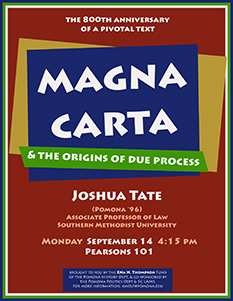
- Joshua Tate (SMU), "Magna Carta and the
Origins of Due Process," September 14, 2015.
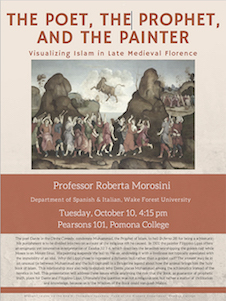
- Roberta Morosini (Wake Forest), "The Poet, the
Prophet, and the Painter: Visualizing Islam in
Late Medieval Florence," October 10, 2017
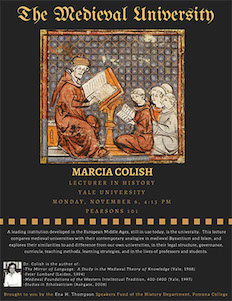
- Marcia Colish (Yale), "The Medieval
University," November 6, 2017.
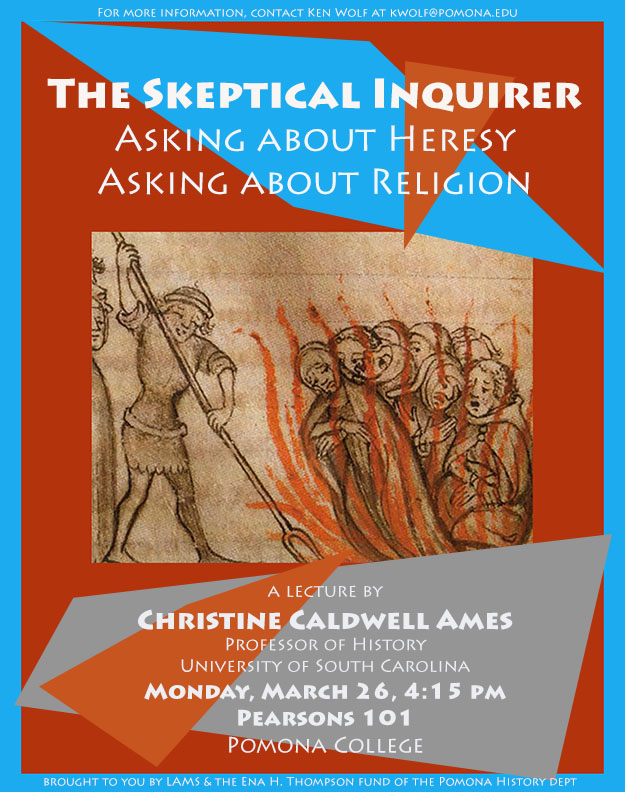
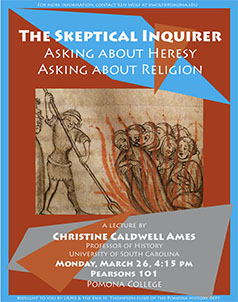
- Christine Ames (University of South Carolina),
"The Skeptical Inquirer: Asking about Heresy,
Asking about Religion," March 26, 2018.
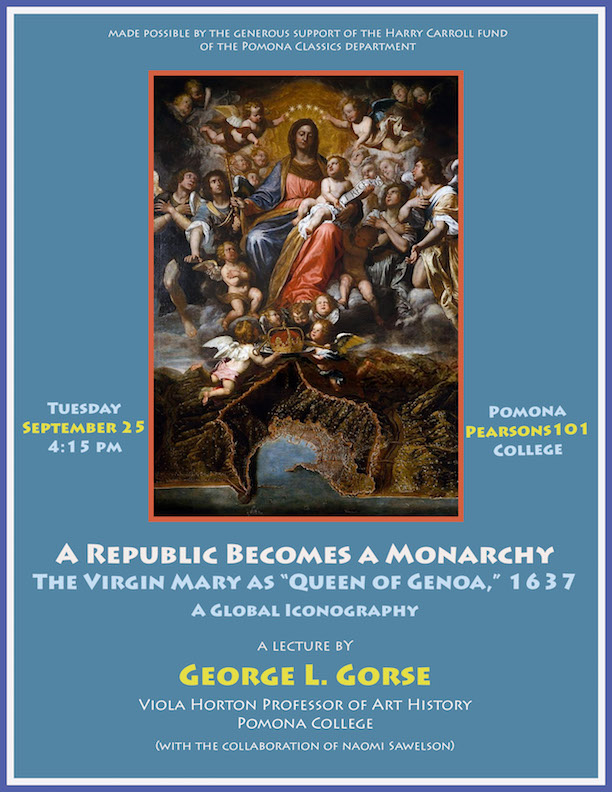
- George Gorse (Pomona College), "A Republic
Becomes a Monarchy: The Virgin Mary as 'Queen of
Genoa,' 1637, A Global Iconography," September 23,
2018.
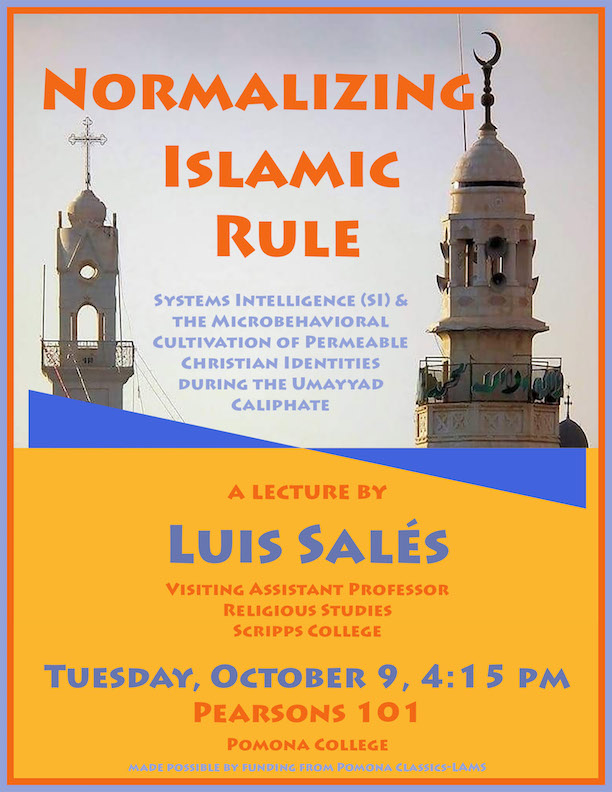
- Luis Sales (Scripps College), "Normalizing
Islamic Rule: Systems Intelligence (SI) and the
Microbehavioral Cultivation of Permeable Christian
Identities During the Umayyad Caliphate," October
9, 2018.
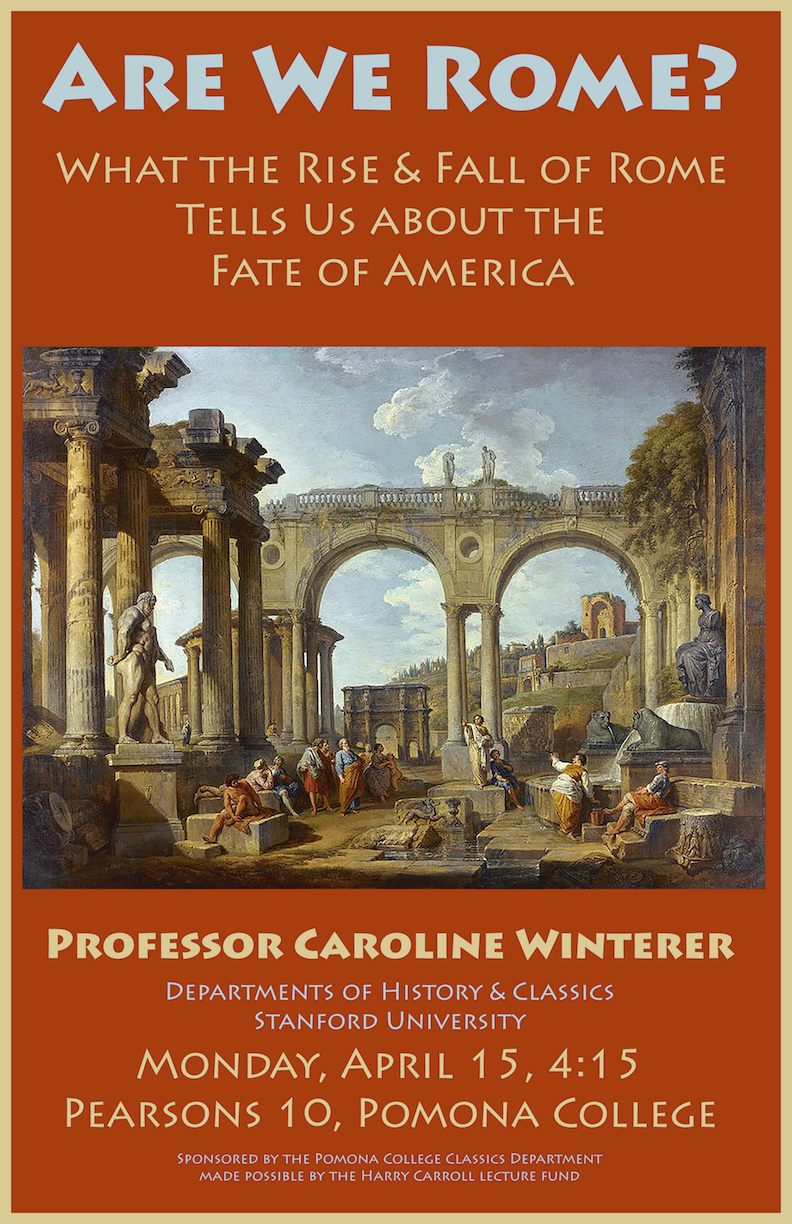
- Caroline Winterer (Stanford University), "Are
We Rome? What the Rise and Fall of Rome Tells Us
about the Fate of America," April 15, 2019.
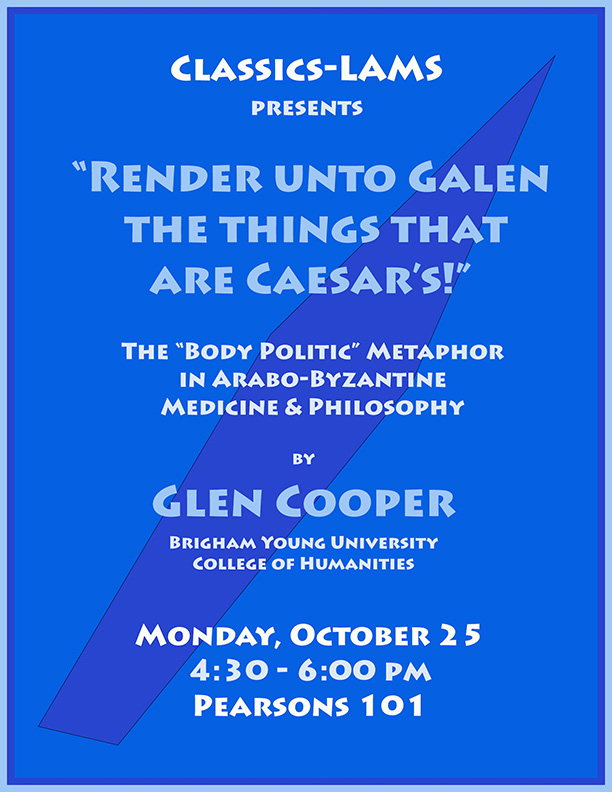
- Glen Cooper (BYU), "'Render unto Galen the
Things that are Caesar's!' The 'Body Politic'
Metaphor in Arabo-Byzantine Medicine and
Philosophy." October 25, 2021.
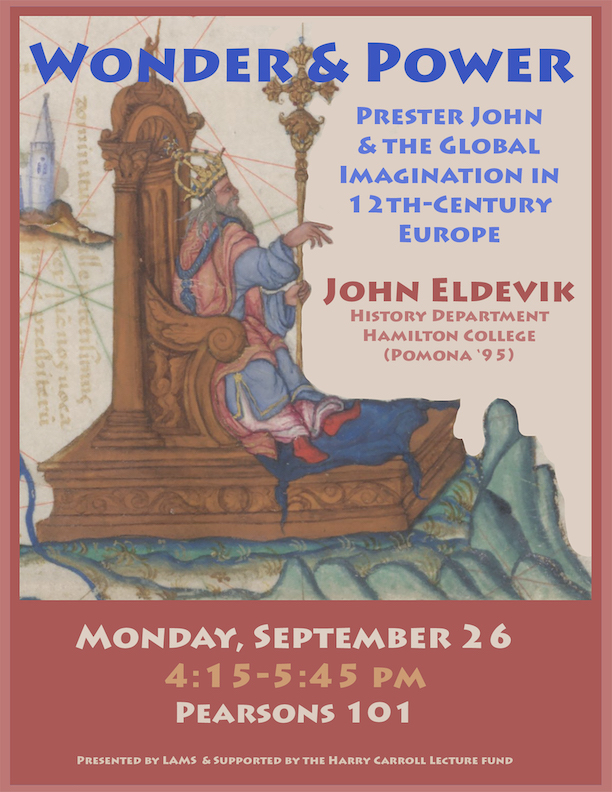
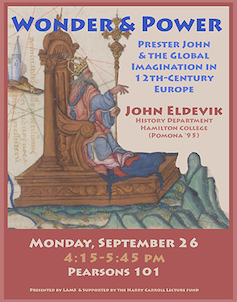
- John Eldevik (Hamilton College): "Wonder and
Power: Prester John and the Global Imagination in
Twelfth-century Europe," September 26, 2022.
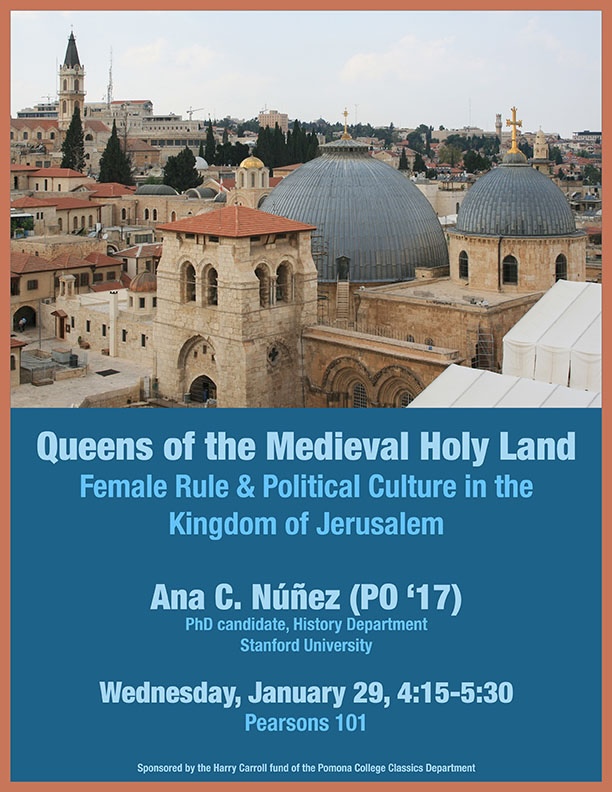
- Ana C. Núñez (Stanford University, doctoral candidate): "Queens of the Medieval Holy Land: Female Rule & Political Culture in the Kingdom of Jerusalem." January 29, 2025.





For more information, contact Ken Wolf,
LAMS coordinator
Alumni Trips
Since 1999 the Pomona College Alumni Travel
Program has been sponsoring alumni trips with
specifically medieval themes. The walking trips
are designed by Peter Watson (Duende Travel) in
consultation with Ken Wolf. For photos from these
expeditions, click on the link below.
Scholarly Resources and Tools
Opportunities for LAMS
students
Journals for Publishing Undergraduate
Research
- Vexillum: The Undergraduate
Journal of Classical and Medieval Studies
-
Dies Legibiles: An Undergraduate Journal of
Medieval Studies (Smith College)
-
Sententiae, Harvard's undergraduate Medieval Studies journal
- a list of journals that publish
undergraduate research (University of North
Carolina)
- another list of journals that publish
undergraduate research (University of
Nebraska)
Summer Programs
- Yale Summer Undergraduate Research
Fellowship: the Religious Studies Department
ay Yale is happy to participate in the Summer
Undergraduate Research Fellowship (SURF) program
which provides current undergraduates with the
opportunity to learn about the kind of work one
can expect to do in graduate school in Religious
Studies. Successful applicants interested in any
field of Religious Studies would spend eight weeks
in June and July at Yale and would work closely
with a faculty mentor. During their time at
Yale, the student would conduct research on a
topic of their choosing in a field of Religious
Studies and would produce a paper.
- Summer Undergraduate
Research Fellowship (SURF) at UC Irvine: UC
Irvine's Summer Undergraduate Research Fellowship
(SURF) program offers undergraduate and master's
diversity students an opportunity to work closely
with faculty mentors on research projects and
provides an intense course of graduate preparation
workshops. The program, which is designed for
students who plan to pursue a Ph.D. or M.F.A.
degree and enter academic careers, provides the
tools needed to facilitate application, admission,
and enrollment to graduate school. The SURF
program is open to virtually all academic fields
at UC Irvine. Qualified students with interest in
pursuing their graduate program at UC Irvine are
especially encouraged to apply. Testimonial
from a LAMS student who actually experienced this
program: "The eight week program consists of
graduate school prep and research itself. Students
are required to write research statements and
personal statements. They are also required to
take a GRE course and the GRE itself (both of
which are paid for by the program). Students also
participate in their own independent research,
which culminates in a research symposium where
participants present on their research. The
stipend is $4000 and housing is included."
- Archaeological
Institute of America, Undergraduate Fieldwork
Scholarship: The Los Angeles County Society of
the AIA invites applications from current local
student members for 2 scholarships for $1,000
each. This award to support participation in an
archaeological field project in summer or fall of
2019, with preference given to those without prior
field experience. These scholarships are to assist
undergraduates gain their first field experience
to explore professional training and a career in
an archaeology-related field, and to encourage
student membership in the AIA ($40:
http://www.archaeological.org/join). Awards can
be used to cover any eligible expenses (upon
presentation of receipts) including travel,
accommodation or tuition costs directly related to
fieldwork participation. Student awardees will
submit a brief report about their project at the
AIA-LAC Fall Garden Party and in the LA County
Society Newsletter. Please send applications
(cover letter with narrative, completed form) to:
Paul D. Scotton (paul.scotton@csulb.edu)
- The Leonard E. Boyle, O.P.
Toronto-Rome Diploma Programme in Manuscript
Studies: PIMS (The Pontifical Institute of Mediaeval Studies) has long enjoyed a
reputation for providing the best training
possible in those technical fields that made its
students uniquely qualified to pursue original
research amongst the manuscript survivals from the
medieval period, namely, Latin Palaeography,
Diplomatics, Codicology, and Textual Editing. Over
the last decade and more, the Institute has
transformed itself into a research institution
offering fellowships to young post-doctoral
students and visiting scholars. But the Institute
has now developed a new curriculum that will make
training in these technical disciplines available
again, and in an expanded fashion, leading to a
formal credential in Manuscript Studies.
The programme is open to all qualified applicants
who feel they would benefit from it: those just
embarking upon their graduate careers who realize
that such training would be a valuable precursor
to the work they are soon to undertake; those
already enrolled in graduate programmes elsewhere
who have recognized the need to acquire skills
that their own programmes do not provide; those
who have already earned their degrees and are in
full-time posts but may be looking to enrich
themselves. Given that many of these potential
applicants will have other obligations during the
fall and spring semesters, this new programme in
Manuscript Studies is designed to run in the form
of intensive summer courses in order to make it
accessible to as many candidates as possible.
Language Programs
- U.C. Berkeley Greek and Latin Summer
Workshops: Since their founding over forty
years ago, the Workshops have successfully guided
thousands of students to basic proficiency in
Greek and Latin. Our time-tested formula prepares
students to enter directly into upper-level
language classes—or simply to continue reading
texts on their own. Replacing more than two
semesters of regular language work, these
immersive ten-week programs require a significant
commitment of time and intellectual energy. In
the first six weeks, students master the
essentials of grammar, syntax, and vocabulary; in
the last four weeks, they put their new knowledge
to work reading extensively in selected texts
(poetry and prose; students choose two of four
options). In addition to six hours of class work
every day, students are expected to spend several
hours daily in study and homework preparation.
Classes are small, though, and students can count
on having plenty of individualized support
throughout their journey. Beyond the classroom,
guest lectures from distinguished Classics faculty
members offer context and insight into
cutting-edge research, and regular social events
provide a venue for further discussion and
camaraderie. In 2018 the Department will offer up
to eight tuition rebates of $3,000. Two of these
are reserved for UC Berkeley students, while the
rest are open to all.
- Catholic University of
America: graduate programs in Greek and Latin with
a Late Antique and Medieval focus
-
Middlebury Summer Study: Arabic: In the Arabic
School, you'll master not only vocabulary and
syntax, but how to use the language to engage
effectively with Arab culture. The focus will be
on Modern Standard Arabic during your five daily
classroom hours, with optional sessions offered in
colloquial dialects such as Moroccan, Egyptian,
and Syrian. Outside the classroom, you'll select
from a wide array of in-language cocurricular
activities—including calligraphy, cooking, cinema,
music, and the Qur'an—each designed to help you
build new vocabulary while developing cultural
fluency.
With connections to prominent universities across
the globe, the Arabic School draws from among the
leading scholars of the Middle East, Africa,
Europe, the United States, and Canada. Our faculty
will support you at every step, helping you
perfect your Arabic as you dive into Arab culture
for eight or six intensive and fruitful weeks.
The Arabic School offers an MA degree program in
Arabic studies or Arabic language pedagogy (TAFL).
- Critical Ancient Hebrew, Brooklyn Institute for Social Research, online course:
Ancient Hebrew is best known as the vehicle for religious texts in Judaism and related traditions: the Bible and its rabbinic commentaries, liturgical poetry, legal codes, and other religious genres. Hebrew literacy not only enriches one’s understanding of Judaism, but also early Christianity and other Jewish-Greek cultures. In this course, we will take a significant step in that direction, introducing ourselves to Biblical and Rabbinic Hebrew in a rigorous, hands-on, reader-oriented way. We will cover the alphabet, grammar, morphology, syntax, and other linguistic features of both stages in ancient Hebrew, allowing students to read prose texts of the Bible and the ancient rabbis, such as the Book of Ruth and rabbis’ commentaries on biblical texts, as well as their own stories. Alongside a strong focus on the tools that students will need to read Jewish religious texts (which formed, in turn, not only Christianity, but also diverse cultures of the Jewish diaspora in Europe, North Africa, and around the world), we will explore Hebrew’s historical development in the context of its relationships to dominant languages and cultures. In this sense, Critical Ancient Hebrew is also an introduction to the history of the Israelites and the Jews as small minorities who formed cultural contact-zones within vast multiethnic empires. What can a study of the Hebrew language and its context teach us—not only about Hebraic history and culture, but also about the processes by which cultures and languages interact, conflict, and, across time, are mutually transformed? Critical Ancient Hebrew is organized across three, 12-week trimesters: Winter (February 15th–May 2nd), Summer (May 23rd-August 15th), and Fall (September 12th-December 12th). Students may enroll in the program in its entirety or on a trimester-by-trimester basis. Our textbook will be Thomas Lambdin’s Introduction to Biblical Hebrew and Miguel Pérez Fernández’s An Introductory Grammar of Rabbinic Hebrew, to be supplemented throughout by readings from the Hebrew Bible and its rabbinic commentaries. The class size is capped at 12 students. Enrollees will have the opportunity to enroll in specialized reading groups in Fall 2024. Payment plans are available; email info@thebrooklyninstitute.com for more information.
-
Turkish Language and Culture Program, Bogazici
University (Istanbul) : In effect since 1982,
the annual international summer program in Turkish
Language and Culture is an accredited program
which offers courses at three basic levels of
language instruction taught by university staff
specialized in teaching Turkish as a foreign
language. The program provides intensive
instruction in Turkish to adult learners while
offering them an opportunity to have first-hand
experience with the Turkish culture.
Courses are offered at elementary, lower and upper
intermediate and advanced levels with a minimum of
5 students. Class size is limited to approximately
10 students. Each level receives 160 hours of
instruction during the program. Classes are held
on weekdays 9am - 1pm. Students meet with their
teaching assistants for one hour in the afternoons
for free conversation.
Weekly Turkish / English lectures are given by
scholars specialized in their fields on various
aspects of the Turkish culture ranging from
economics, history, literature, fine arts,
architecture and others. Weekly Turkish film
sessions are scheduled for Monday afternoons.
Participation in cultural events in the city and
daily excursions to historic and/or recreational
sites may be organized on demand and interest. The
cost of these excursions is not included in the
course fees.
Post-Bac and Bridge Programs
-
Classical Studies post-baccalaureate program at
Columbia: The Post-baccalaureate Certificate
Program in Classics at Columbia University
provides college graduates with the opportunity to
improve their facility with ancient Greek and
Latin, and to expand their knowledge concerning
the ancient world. Designed primarily for
students interested in preparing for
graduate-level study of Classics or related
disciplines such as Ancient History, Art and
Archaeology, Philosophy, Religion, or Medieval
Studies, the program also accommodates qualified
individuals with different educational goals and
professional objectives, such as careers in
secondary education.
- Classical Studies post-baccalaureate
program at Penn: Prepare for graduate-level
studies in Classical Studies, archaeology, ancient
history or related fields with Penn's Classical
Studies post-baccalaureate program. We offer Ivy
League preparation in Greek and Latin to equip you
for the post-secondary school application process
and beyond. Our program is the oldest of its kind
in the world and draws on Penn's resources - a
leading Classical Studies Department, the
University of Pennsylvania Museum of Archaeology &
Anthropology and the Kislak Center for Special
Collections, Rare Books and Manuscripts - to
prepare you to become a competitive candidate. Our
flexible program focuses on immersive, full-time
study in residence for two semesters, during which
you may choose Greek and Latin classes at a
variety of levels. You may enroll in the program
for up to four semesters, depending on your needs
and developing interests. You are assigned to a
dedicated faculty advisor who works closely with
you to ensure you are taking the best classes for
your needs and connects you to important resources
both inside and outside of the University. Penn's
Classical Studies department fosters a close
community of scholars and professors and opens the
doors to the ancient world.
- The
MICHHERS Program: The University of Michigan
invites outstanding individuals underrepresented
in their field of study to apply for the Michigan
Humanities Emerging Research Scholars Program
(MICHHERS). The MICHHERS program is designed to
encourage undergraduate, recent B.A.s, and
Master's students from diverse cultural, economic,
geographic, and ethnic backgrounds to consider
pursuing a doctorate degree in Humanities.
Students interested in the fields of English,
History, and Linguistics are eligible. This summer
research experience will help students learn about
the various fields within their chosen discipline
along with the latest methodologies and
developments from faculty in individual
departments. Students will have the opportunity to
work on a piece of their own scholarship in
consultation with U-M faculty and graduate
students in their field.
- Minority Scholarship in
Classics and Classical Archaeology: The
Committee on Diversity in the Profession of the
Society for Classical Studies (SCS) invites
applications from minority undergraduate students
from across North America for scholarships to be
awarded for Summer 2019. The purpose of the
scholarship is to further students' study of
classics or classical archaeology with
opportunities not available during the school
year. Eligible proposals might include (but are
not limited to) participation in classical summer
programs or field schools in the Mediterranean or
language training at institutions in the U.S.,
Canada, or Europe. The maximum amount of each
award will be $4,500. Please note that there is an
important change this year to the application
requirements. We still require two letters of
recommendation. However, we are no longer
requiring that at least one letter come from a
member of the SCS. Membership in SCS is not
required for either of the letter-writers this
year. We hope that this change will open up the
scholarships to more applicants.
- UCLA Post-Bac Scholarship: The
Department of Classics at UCLA is pleased to
announce the following opportunity designed to
advance the department's goals of diversity and
inclusion. The department is offering a one-year
tuition scholarship for our post-baccalaureate
program in Classics for the academic year
2022-2023, designed to benefit a promising
candidate for graduate work who needs an extra
year of preparation in the ancient languages
before applying to graduate programs in Classical
Studies. Members of groups who contribute to the
University's diversity--including members of
groups that have been historically and are
presently underrepresented in the academy (e.g.,
racial and ethnic minorities and individuals from
low income backgrounds)--are especially encouraged
to apply. Applicants should have completed a
bachelor's program or equivalent in Classics or
a related field and must be legally authorized
to work/study in the United States at the time of
submitting the application.
Masters Programs
- Funded Masters in
Early Christian Studies at Notre Dame: The
M.A. degree in Early Christian Studies (ECS) is a
two-year interdisciplinary program offered jointly
by the Departments of Classics and Theology, with
the participation of faculty in several other
departments. The program is designed to prepare
beginning graduate students for the advanced study
of early Christianity and late antiquity in
various disciplines and areas of interest. The
program is multidisciplinary in its course
offerings but interdisciplinary in its basic
orientation. It provides training in philology,
theology, history, liturgy, art history and
philosophy. In addition, students pursue advanced
studies in at least two ancient languages relevant
for early Christianity (typically, Latin and/or
Greek and/or Syriac and/or Hebrew and/or Arabic).
Each student develops a curriculum to meet
individual needs in consultation with the director
of the ECS program and other faculty
advisers.
- Bridge MA in Classical Studies at
Michigan: The Department of Classical Studies
at the University of Michigan is pleased to
announce an exciting opportunity for students
interested in pursuing advanced degrees in
Classical Studies. The Bridge MA degree program is
a fully funded, three semester program designed to
assist promising students in Classical Studies,
Ancient Philosophy, Ancient History, or Greek and
Roman Archaeology in developing the Ancient Greek
and Latin language skills needed to pursue a PhD
in Classical Studies."We are seeking exceptional
students with demonstrated potential for graduate
study. Individuals from non-traditional
backgrounds, ethnically diverse cultures, or first
generation college students are particularly
encouraged to apply. Our goal is to attract
diverse scholars with unique experiences who are
likely to continue and make a valuable
contribution to our PhD programs in Classical
Studies."
- Oxford
MPhil in Islamic Studies and History: The
course of study focuses on the political, social,
and intellectual history of the central Islamic
lands (Egypt, the Fertile Crescent, the Arabian
Peninsula, Iran, Central Asia and Anatolia) up
until c. 1800, and differs from analogous MPhil
courses at other universities in the significance
it places on language instruction in classical
Arabic, Persian and Turkish, and the study of
primary sources.
-
Ertegun (Oxford): Graduate Scholarship Programme
in the Humanities : A wonderful opportunity
(recently enjoyed by one of our recently-graduated
LAMSters) to spend a year doing graduate work at
Oxford. Applications may be made by those in
fields covered by the following Faculties:
Classics (including classical archaeology);
English Language and Literature; Fine Art (DPhil
in Contemporary Art History and Theory only),
History (including History of Art and the History
of Architecture); Linguistics, Philology and
Phonetics; Medieval and Modern Languages (covering
most European languages and their literature);
Music; Oriental Studies (including Far Eastern and
Middle Eastern Studies, and the study of a wide
range of languages); Philosophy; Theology and
Religion; and the Film Aesthetics and Women's
Studies interdisciplinary courses.
- University of Edinburgh Masters' programs
in Late Antique, Islamic, and Byzantine
Studies: The Master's in Late Antique, Islamic
and Byzantine Studies (LAIBS) offers you the
opportunity to study a seminal period of world
history, and the rich cultures of the long Late
Antiquity and the Islamic and Byzantine Middle
Ages, at an advanced level through taught courses
and independent research. The programme involves
two semesters of teaching followed by an
individual research project and can be tailored to
suit you.
- MARS: Medieval and Renaissance Studies at University College London: This is a rigorous and friendly MA program based in Bloomsbury, in London, close to the British Library, the British Museum and a number of London’s important collections and libraries. The programme is interdisciplinary, with the chance to study medieval languages, palaeography, and book studies, as well as modules in history, literature, archaeology, and history of art, as well as research supervision in a wide range of disciplines. MARS make extensive use of London collections in its teaching. The MARS programme can be taken either full time over one year, or part-time over two years. Applicants are eligible for a range of scholarships. In addition to the programme-specific Chattaway scholarship, the UCL history department can distribute up to 6 Baxendale scholarships, which will cover the full home tuition fees for the year’s MA. All applicants to the MARS MA are eligible to be considered for these scholarships. Those who have been awarded a scholarship will be notified by the end of June.
- Duke
University: Master's in Digital Art History:
The "Wired!" Lab at Duke University offers a
Digital Art History track as part of the
Department of Art, Art History & Visual Studies'
Master of Arts degree in Historical and Cultural
Visualization. The 18-month Digital Art History
program integrates historical disciplines and the
study of cultural artifacts with digital
visualization techniques for the analysis and
presentation of research. The program builds on
courses and well-developed strengths at Duke
University, and requires 10 courses over three
semesters in addition to summer research. Students
affiliate with an existing faculty research
initiative, from which they will develop their own
independent research project for the M.A. thesis.
Common themes that unite the various projects are
the visualization of process, the representation
of change over time, recontextualizing displaced
objects and object biographies. The M.A. prepares
students for future work in such fields as public
history, city planning and architectural design,
cultural heritage, museum exhibition design and
visualization-based journalism, and provides a
springboard for more advanced study in art
history, archaeology, architectural history and
visual studies. Limited funding may become
available in the form of grants and assistantships
to students upon positive progress in the program.
- Masters in
Ancient/Medieval History at Cal State, Long
Beach: "We are pleased to share the news that,
thanks to a generous bequest from our late
colleague Professor David Hood, our department
will be once again offering an M.A. field in
ancient and medieval history beginning in Fall
2022. Our program is ideal not only for students
who are considering an academic career who need to
build their skills before making the jump to a
Ph.D. program but also for those planning careers
(e.g. library/information science, secondary
education, museum/archival work) for which an
advanced degree in history gives them a leg up, or
for those simply interested in pursuing historical
knowledge beyond their undergraduate education.
Past M.A. graduates in ancient and medieval fields
have gone on to doctoral programs at Princeton,
Yale, Fordham, Cardiff, and UC Riverside, among
others. Other graduates of the broader M.A.
program are successful secondary teachers and
community college faculty, as well as
professionals working in government, private
research firms, business, museums, and the
National Park Service. Our department offers a
rigorous five-semester program in which students
learn historical methodology, primary research
skills, and historiographic analysis while
building content knowledge in two geographic
fields (U.S. History, World History, Modern
European History, and either Ancient or Medieval
history). For students interested in Ancient or
Medieval history in particular, our broader campus
community provides additional opportunities,
including instruction in Latin, ancient Greek, and
numerous modern languages, as well as strong
collaborative relationships with the CSULB
Medieval & Renaissance Studies Center and the
Classics and Comparative Literatures departments,
giving students the opportunity to participate in
conversations and research across multiple
disciplines. Our core faculty in the field are:
Marie Kelleher (medieval Iberia and the
Mediterranean, women’s & gender history, legal
history); Mik Larsen (social history of the Roman
Empire, ancient Mediterranean religion, ancient
historiography and rhetoric). We will be welcoming
students with an interest in the Ancient and
Medieval fields for Fall Semester 2022, with
applications due in February 2022."
- Museum Studies at CGU: Museum
Studies investigates the history and political
role of museums, the interpretation and display of
cultural productions, and topics of concern to
museums as cultural organizations, using a
multidisciplinary, practice-based approach to
understand the historical development of this
evolving field. The theoretical and applied
aspects of the concentration in Museum Studies
give students the opportunity to participate in
multidisciplinary graduate coursework in the
humanities, social sciences, curatorial methods,
and management in addition to hands-on, practical
learning through the optional internship. Students
learn about the history and political role of
museums, the interpretation and display of a wide
variety of cultural productions, and topics of
special concern to museums as cultural
organizations. The concentration emphasizes
critical, theoretical, and practice-related
developments in the ever-changing field of
museums, exhibitions, and sites of public memory.
Students will acquire the knowledge and expertise
to meet the challenges confronting arts and
cultural organizations today. The School of Arts &
Humanities offers the concentration in Museum
Studies to students in the Applied Women’s
Studies, Cultural Studies, English, History, and
Religion programs. The concentration is awarded in
conjunction with the degree and is noted on the
transcript as an additional area of
qualification.
PhD Fellowships
- PhD
Fellowships at Bryn Mawr College: The Graduate
Group in Archaeology, Classics, and History of Art
at Bryn Mawr College invites applications from
outstanding candidates who are interested in
pursuing graduate study in one of the three
disciplines. The Graduate Group, established in
2004, provides a forum for interdisciplinary
collaboration and research and promotes a strong
scholarly community among its students. In
addition, the unique combination of three
prestigious graduate programs in the context of a
small teaching- and research-intensive liberal
arts college fosters a special experience.
Students can enjoy close faculty mentorship as
well as a significant degree of freedom in
crafting their program of study and research. The
Graduate Group offers several PhD fellowships
including the so-called Arete Fellowships for
exceptional applicants to any of the three
programs, the NEH-sponsored Multidisciplinary
Fellowships for students who would like to conduct
graduate work in more than one discipline, and
curatorial internships in Bryn Mawr's Special
Collections and several Philadelphia-based
museums. Other funding opportunities (research
fellowships, teaching assistantships, and travel
grants), both for domestic and international
students, are available through the Bryn Mawr
Graduate School of Arts and Sciences. All admitted
students are fully funded for six years (23-25k
for 12 mos.) and also receive a health insurance
subsidy and tuition award.
Post-doctoral Fellowships
- Post-Doctoral Mellon
Fellowships at the Pontifical Institute of
Mediaeval Studies, Toronto : The Andrew W.
Mellon Foundation of New York City has generously
funded annual postdoctoral Fellowships at the
Pontifical Institute of Mediaeval Studies for
nearly a decade. The grant provides for up to four
Fellowships each year, to be used for research at
the Institute in the medieval field of the
holder’s choice. Mellon Fellows will also
participate in the interdisciplinary Research
Seminar.The Mellon Fellowships are intended for
young medievalists of exceptional promise who have
completed their doctoral work, ordinarily within
the previous five years, and have defended their
thesis successfully before the 1 February
application deadline, and may include those who
are starting on their professional academic
careers at approximately the Assistant Professor
level. Fellowships are valued at approximately Can
$40,000.
LAMS Affiliations:
- CMRS
Center Early Global Studies (UCLA): The Center
assists scholars, students, and the larger
community to acquire a deeper understanding of
issues rooted in the past that resonate yet in our
world today. It sponsors lectures, seminars,
conferences, and fellowships for visiting
professors, post-doctoral scholars, graduate
students, and researchers. The academic journals
Viator and Comitatus are edited and
published by the Center, as are a range of books
and monographs. The Center promotes and encourages
interdisciplinary and cross-cultural studies of
the period from Late Antiquity to the middle of
the seventeenth century.
- USC Dornsife Center for the
Premodern World: The Center for the Premodern
World at USC creates space and offers resources
for the study of cultures and civilizations,
beginning with the earliest historical eras up to
the end of the Middle Ages and the beginning of
the modern world. The Center aims to have a truly
global reach in terms of areas of research and as
such has the potential to involve over forty
faculty on campus in its activities. Already it
co-sponsors an interdisciplinary research seminar
on the Premodern Mediterranean. The director hopes
to expand the number of such seminars and also to
bring to campus a series of internationally
recognized scholars to offer public lectures and
to work closely with faculty and graduate students
on their own academic projects. The Center also
anticipates inaugurating major initiatives in the
digital humanities, including collaboration with
Doheney Library's Special Collections Department
to increase access to the university's collections
of medieval manuscripts and early printed books.
Finally, the Center will seek ways to promote
scholarship which is serious and which also has
the potential engage a wide, cultural audience.
Few symbols of the ancient world are as powerful,
haunting, and evocative as the city of Troy. It is
both fitting and ironic that USC, a new Troy in
the relentlessly modern city of Los Angeles, would
create a space for the study of premodern dreams
and their enduring legacies.
- The Mediterranean Seminar: based at the
Center for Mediterranean Studies at the University
of California, Santa Cruz, and the department of
Religious Studies at the University of Colorado at
Boulder, The Mediterranean Seminar sponsors a
range of activities and programs related to the
study of the Mediterranean as a region, with an
emphasis on the Pre-Modern and Early Modern
periods.
- Medieval
Institute (Notre Dame): The Medieval Institute
promotes research and teaching on the multiple
cultures, languages, and religions of the medieval
period. Offering both undergraduate and Ph.D.
programs, the Institute facilitates the activities
of the largest contingent of medievalists at any
North American university. Over sixty faculty
medievalists, from a dozen different departments,
create a vibrant, interdisciplinary, intellectual
community that sponsors frequent speakers,
conferences, and other events. The outstanding
medieval studies library collection attracts
researchers from around the world.
- Centre
for Medieval Studies (Toronto): The Centre for
Medieval Studies was envisaged by its founders not
just as an institutional umbrella for traditional
departments but as a meeting point at which topics
and issues for multiple disciplines would be
explored and studied in depth. Medieval Studies in
Toronto has an international reputation, resting
on the wide-ranging interests of its faculty, the
calibre and preparation of its graduates, and its
outstanding library facilities. The Centre
coordinates a program that includes various
resources of the Pontifical Institute of Medieval
Studies and of a wide variety of participating
departments and programs within the University of
Toronto. The Centre also sponsors several major
research projects, and is home to a large body of
scholars, numerous publication series, and to
medieval drama and music groups. The Centre
represents a large and highly interactive
community of professionals who work in widely
diverse area.
For more information,
contact Ken
Wolf, LAMS Coordinator